
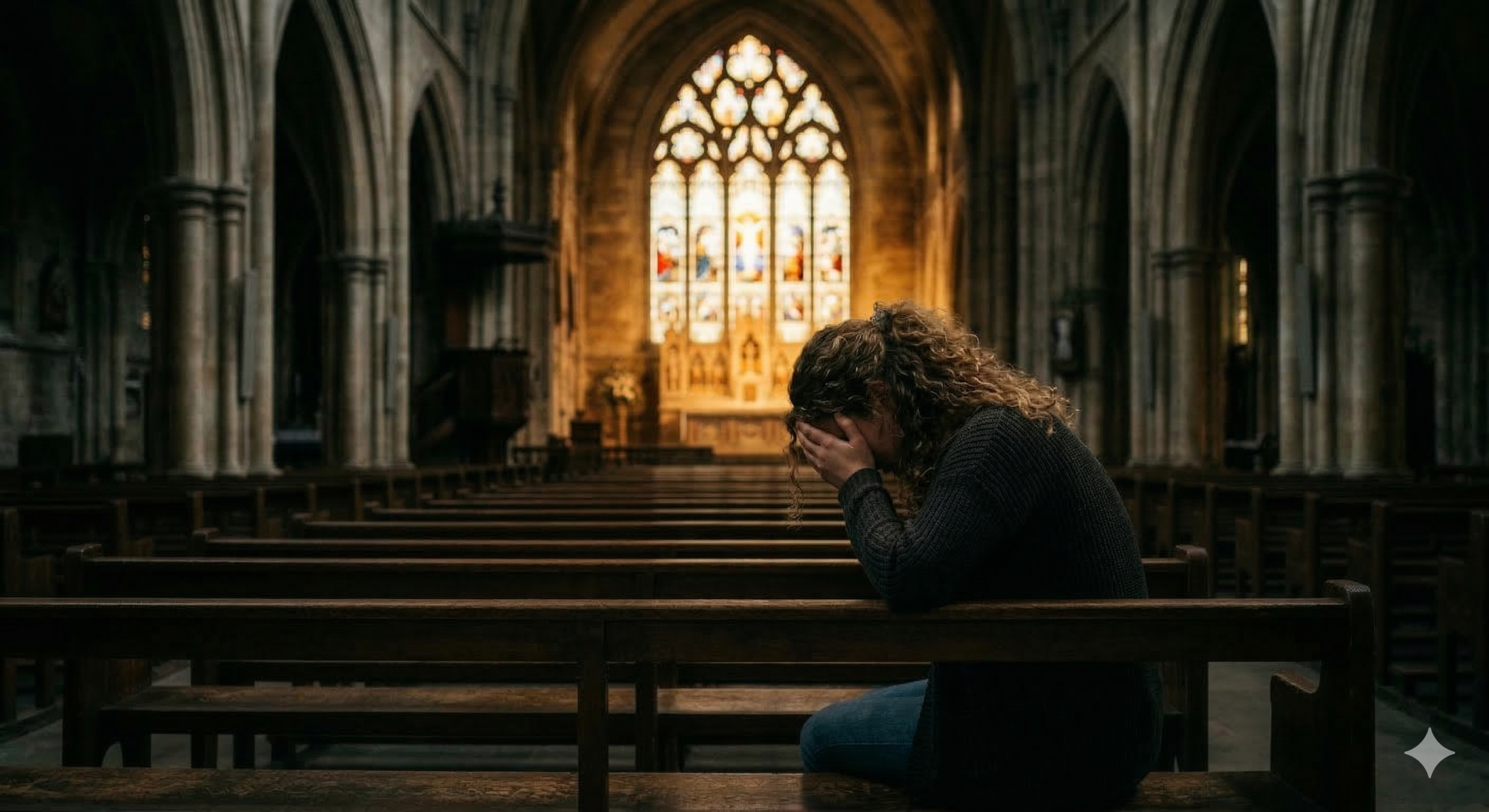
Why This Reaches So Far
For many people, the deepest struggle is not that they have never heard about God. It’s that the people who spoke most confidently in His name left behind confusion, fear, shame, or distrust. Sometimes the damage came through a church culture that felt cold and performative, where everyone seemed fluent in the language of faith while very little seemed alive beneath it. Sometimes it came through leadership marked by dishonesty, control, or spiritual intimidation. Sometimes it was less dramatic and more gradual, formed over years in an environment that spoke often about God but gave no clear sense of His character.
That kind of experience rarely stays contained to one bad memory. Church is not just another social setting, and spiritual authority does not wound in the same way as an ordinary disappointment. When people are hurt in a place tied to truth, holiness, love, repentance, and the name of God, the confusion often spreads in several directions at once. A person may come away wary of authority, exhausted by religion, angry at Christians, and uncertain whether God Himself is anything like the people who claimed to represent Him.
That’s why church hurt can reach so deeply into a person’s view of God. It doesn’t only sour the idea of an institution. It can alter the imagination itself. It can make God seem harsh when He is not harsh, manipulative when He is not manipulative, absent when He has not abandoned anyone, or false because others were false while speaking about Him.
The Damage Should Be Named Honestly
One of the most unhelpful things Christians sometimes do is rush to soften church hurt before they have really reckoned with it. They reach for familiar phrases about imperfect churches, flawed people, and the need to keep one’s eyes on Jesus. There is truth in some of that, but when it is offered too quickly it often sounds like a way of managing someone’s pain rather than listening to it.
Some wounds are not small, and it is neither wise nor godly to speak as if they are.
The harm can take many forms. In some churches it appears through open manipulation, public humiliation, or leadership that uses guilt and fear to maintain control. In other places it comes through hypocrisy that settles into the culture itself. People hear holiness preached while secret corruption goes untouched. They are told to pursue humility while pride quietly shapes the atmosphere. They come looking for refuge and instead find gossip, vanity, posturing, or a strange spiritual coldness that makes everything feel thinner than it should.
When that happens, the problem is not merely that someone had an unpleasant experience in a religious setting. Evil done in a church is still evil. Hypocrisy clothed in Christian language is still hypocrisy. The misuse of God’s name does not become less serious because it took place in a sanctuary.
Scripture never asks us to pretend that spiritual corruption is minor simply because it wears familiar language. In fact, the Bible is often more severe about false shepherding and religious pretense than many modern Christians are willing to be. The damage should be named for what it is.
How Hurt Begins to Shape a False Picture of God
Once that damage has been done, many people find it difficult to separate God from those who spoke about Him. That confusion is deeply understandable. A child raised under religious control may begin to associate God with pressure and fear. Someone who lived under harsh or performative leadership may begin to imagine God as impossible to please. A person formed in an atmosphere of spiritual dishonesty may start to suspect that God Himself is somehow hollow or unreal.
The shift is not always conscious. Often it happens slowly. Certain words begin to feel contaminated. Faith, obedience, holiness, repentance, worship—terms that should carry weight and beauty can become loaded with memories of coercion, shame, or pretense. The result is that a person may think they are reacting to God when they are actually reacting to a distortion of Him.
That distinction matters. Not because the hurt is unreal, but because hurt alone cannot tell the truth about God. It can reveal that something was terribly wrong. It can expose corruption with painful clarity. But it can also leave behind false associations that feel convincing simply because they were formed in a place where trust was supposed to be safe.
The real question becomes whether the people involved were showing God truthfully or obscuring Him. Those are very different things. A corrupt church may tell you many things about sin, power, pride, fear, and self-protection. It does not, by its corruption alone, tell you the truth about God.
Jesus Never Treated Religious Corruption Lightly
This is one of the places where people often need to look again at Christ Himself.
Some who have been wounded by church life begin to assume that Jesus would be gentler with religious hypocrisy than they are. They feel disgusted by what was done to them and then quietly wonder whether that disgust must mean they have become bitter or spiritually resistant. But when the Gospels are read carefully, Jesus does not treat religious corruption as a minor issue.
He was patient with the weak. He was merciful toward those who knew they were in need. He did not crush bruised people who came to Him honestly. Yet when He confronted spiritual pride, false shepherding, public righteousness, or leaders who used truth as a burden while avoiding its demands themselves, His words were severe. He exposed pretense, rebuked those who shut others out of the kingdom, and spoke plainly against the kind of religion that looked clean outwardly while remaining rotten within.
Matthew 23:27–28
“Woe to you, scribes and Pharisees, hypocrites! For you are like whitewashed tombs, which outwardly appear beautiful, but within are full of dead people’s bones and all uncleanness. So you also outwardly appear righteous to others, but within you are full of hypocrisy and lawlessness.”
That does not mean every conclusion drawn by a hurt person is correct. Pain can still distort as well as clarify. But it does mean that hatred of spiritual hypocrisy is not automatically a rejection of God. In many cases, it reflects a moral instinct that is closer to Christ than the environment that caused the wound in the first place.
The Failure of the Church Is Not the Failure of God
This may sound obvious when written plainly, but it is often one of the hardest truths for wounded people to hold onto.
Churches fail. Pastors fail. Parents fail. Christian communities fail. Some fail through weakness and immaturity. Others fail through selfishness, deceit, greed, or abuse. There are ministries built more on image than substance and churches that have learned how to preserve reputation at the cost of truth. None of this should be excused, and none of it is imaginary.
Still, God is not made false because others lied about Him.
That distinction can feel almost unreachable when a person first begins to sort through what happened. If the messenger was corrupt, the message itself may seem contaminated. If the people who taught you about God were manipulative, then the very thought of trusting God may seem inseparable from surrendering to more harm. At that point, the problem is no longer only what happened in church. The problem is that the categories themselves have been damaged.
Yet God is not revealed truthfully by those who contradict Him. He is not made ugly because others carried His name in ugly ways. When people use Scripture to control, shame, flatter, dominate, or preserve themselves, they are not giving a clearer view of God. They are standing in opposition to His character while claiming to defend it.
That’s part of what makes spiritual corruption so destructive. It not only harms people directly. It leaves behind a counterfeit image of God and then asks the wounded person to live under it.
Some People Were Formed by Religion Without Seeing Christ Clearly
There are people who spent years around church structures and still never heard the Gospel with any real clarity. They may have learned rules, social expectations, religious vocabulary, and moral pressure, but never came to understand who Christ is and what He actually does for sinners.
In some environments, people are taught to fear exposure more than sin itself. In others, belonging matters more than truth. In others, grace is spoken of but never really felt, because the culture is built around performance, image, or unspoken hierarchy. A person can live for a long time inside that kind of system and assume they have known Christianity when in reality much of what shaped them was religious habit or spiritual theater.
That does not mean every painful church story is simple, nor does it mean every wounded person was only a victim and never a sinner in the story. But it does mean some people need the freedom to admit that what they were formed by was not a clear expression of Christ. They may have been around religion for years while remaining deeply unfamiliar with the God they were told they already knew.
That realization can be unsettling, but it can also become an opening. It may be the beginning of learning the difference between a religious system and the living Christ who stands above it and judges it.
You Still Have to Reckon with Jesus
Church hurt explains a great deal, but it cannot finally answer the question of who Jesus is.
It can explain why a person recoils from Christian language. It can explain suspicion, anger, avoidance, grief, and confusion. It can explain why stepping into a church building feels difficult or why trust no longer comes easily. But eventually the question becomes more personal and more direct. Whatever others did in Christ’s name, who is Christ Himself?
That question matters because He cannot simply be collapsed into the failures of those who misused Him. The hypocrite is not Jesus. The manipulative pastor is not Jesus. The vain church culture is not Jesus. The family system that used religion as a tool of control is not Jesus. Those people may have borrowed His language, but that is not the same as resembling Him.
The tragedy of church hurt is that the people who most misrepresented Christ can become the lens through which Christ is viewed. Then the wounded person ends up turning away from the One who most clearly opposes the falsehood that harmed them. That is part of what makes this kind of pain so spiritually disorienting. It does not merely injure trust in people. It places Christ behind a screen built by those who contradicted Him.
Healing often begins when a person is willing, however cautiously, to look at Him directly.
Leaving Can Be Necessary, but Leaving Is Not the Same as Healing
Some people do need to leave a church. There are situations where remaining would not be loyalty or maturity but confusion. A church that protects corruption, distorts the Gospel, or continually wounds the weak should not be romanticized as a place to endure indefinitely for the sake of appearances. There are times when departure is the wise and honest response.
But even when leaving is necessary, it does not resolve everything.
A person may get distance from a church and still carry its voice within them for years. They may leave the system while continuing to imagine God through the system’s categories. They may reject one toxic form of Christianity while still living under its assumptions in quieter ways. The body leaves before the mind does, and sometimes the mind leaves before the heart does.
That is why healing usually requires more than escape. It requires re-learning who God is apart from those who lied about Him, used Him, or reduced Him to a religious instrument. It often involves grief that cannot be hurried, anger that must be brought into the light rather than denied, and a slow re-reading of Scripture in which familiar words begin, over time, to sound different because they are no longer being filtered through the same distortions.
There is no clean timetable for that work. It is often uneven and deeply personal. But it matters because without it, a person may leave a false church while continuing to live under a false image of God.
The Church Matters, but It Must Never Replace Christ
People sometimes react to church hurt in opposite ways. Some remain too long in destructive settings because they believe loyalty itself is holy. Others leave one false church and conclude that all church life is fundamentally corrupt and unnecessary. Both responses can grow out of real pain, but neither finally reflects a healthy understanding of what the church is.
The church matters because Christ loves His people and has not designed the Christian life as permanent isolation. Believers need fellowship, correction, worship, teaching, and the ordinary life of a faithful body. Yet no church is God, and no institution deserves the kind of trust that belongs to Christ alone.
That distinction is not a small one. It protects against both blind submission and total rejection. A church may be genuine and still flawed. It may nourish people well and still require correction in some areas. It may be a place of real faith without becoming the measure of truth in itself. Once any church begins to act as though its authority is beyond question simply because it speaks about God, it has already stepped into dangerous territory.
A more biblically sane view of the church helps here. The church is meant to live under Christ, not in His place. It bears witness to Him. It does not invent Him. It is accountable to His Word. It is not immune from sin, pride, or drift simply because it carries Christian language.
God Is Not Reduced by Religious Distortion
One temptation after church hurt is to assume that the answer must be a softer, smaller, more accommodating God than the one a person thought they knew before. If religion was harsh, then perhaps God must be morally vague. If authority was misused, then perhaps obedience itself must be suspect. If holiness was preached by hypocrites, then perhaps holiness can only be another name for dead religion.
But the answer to distortion is not a diminished God. It is the true God.
That means the correction is not found by running to the opposite error. If people were severe, God is not therefore sentimental. If leaders were controlling, God is not therefore indifferent. If church culture was hypocritical, God is not therefore unconcerned with holiness. The healing of falsehood comes through truth, not reversal for its own sake.
That truth may take time to receive because wounded people often need more than new ideas. They need their imagination retrained. They need to see that God’s holiness is not the same thing as human harshness, that His authority is not the same thing as manipulation, that His commands are not the same thing as spiritual control, and that His nearness is not threatened by the corruption of those who used His name badly.
Where Healing Begins
When church hurt has distorted a person’s view of God, the first step is often not resolution but honesty. The harm has to be named truthfully. Evil should not be excused because it happened in a church. False shepherding should not be cleaned up with polite language. Hypocrisy should not be treated as a small flaw when it has done deep spiritual damage.
But honesty alone is not enough. A person also has to begin learning, however slowly, that God is not identical to those who misrepresented Him. That can take time. It may involve grief, anger, caution, and a long process of disentangling Christ from the distortions that gathered around His name. It may involve meeting Him again in Scripture with fewer borrowed assumptions and more direct attention.
That work is slow because church hurt often leaves behind more than pain. It leaves behind images, reflexes, suspicions, and habits of interpretation. Even so, those things do not have to define the future forever.
The people who harmed you may have shaped the way you first imagined God, but they do not have the right to define Him. They do not get the final word simply because their influence was early or intense. If Christ is truly who He says He is, then the falsehood that surrounded His name is not the truest thing about Him. And if that is true, healing begins not when the past is denied, but when God is slowly seen again without the face of the wound standing in front of Him.