
What Catholicism Claims to Be
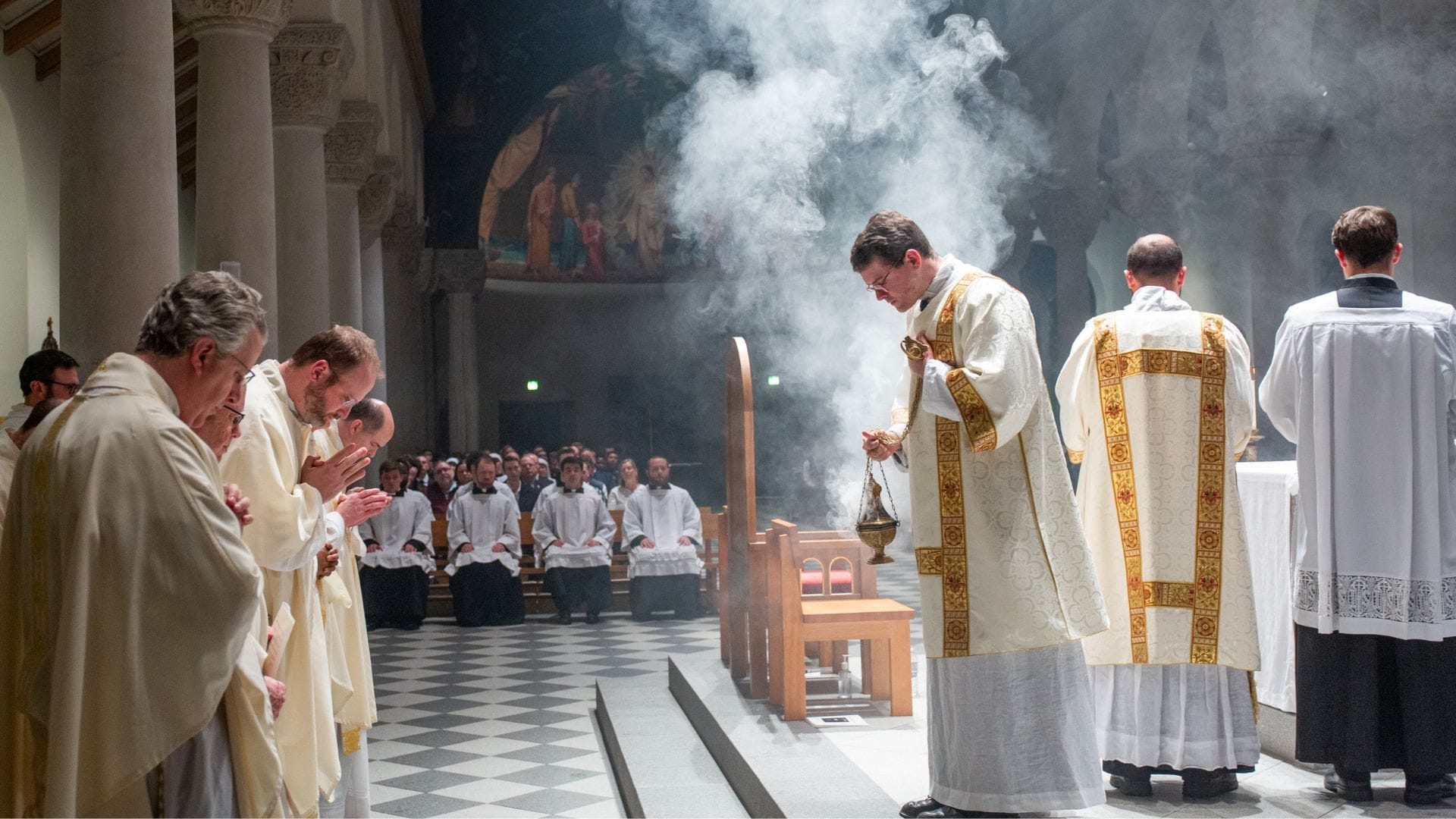
Roman Catholicism presents itself as the historic church founded by Jesus Christ, preserved through apostolic succession, governed by bishops, and visibly unified under the pope. It doesn’t describe itself as a new religion standing outside Christianity. It claims continuity with the apostles and insists that this continuity remains embodied in a visible institution.
That is part of what makes Catholicism such an important subject in apologetics. Their beliefs don’t come to people sounding obviously foreign to the Christian faith. It uses Christian language and speaks about matters Christians recognize at once, including who God is, who Christ is, and how salvation is understood. It also confesses the Trinity and affirms that Jesus Christ is fully God and fully man. In many settings, Catholicism carries an air of seriousness and historic weight that many people associate with reverence, yet the central issue is whether its authority structure and gospel remain governed by Scripture.
The issue needs a plain answer. Rome binds the conscience not to Scripture alone, but to Scripture as joined to tradition and interpreted through the magisterium. It upholds papal claims Scripture does not authorize, and it teaches doctrines such as Marian dogmas, prayers to saints, purgatory, indulgences, and a sacramental system that changes how the gospel is understood. Catholicism preserves major Christian truths, yet places them inside a system that corrupts the rule of faith and the doctrine of salvation.
Christ in Catholic Doctrine and the Deeper Problem
Roman Catholicism teaches that Jesus Christ is fully God and fully man. It teaches His virgin birth and His death for sinners, and it also teaches His bodily resurrection, His ascension, and His return in judgment. On paper, that Christology is orthodox. Catholicism does not reduce Jesus to something less than the divine Son, and that should be said plainly.
Still, formal orthodoxy on the person of Christ does not settle whether a system is faithful. False teaching is often harder to detect when central truths remain in place. Open denial is not the only danger. Error can grow when a system builds so much around Christ that His sufficiency is no longer seen with biblical clarity.
The New Testament presents Christ as the only mediator between God and man and as the complete Savior of His people, whose sacrifice for sin does not need to be repeated or supplemented. Catholicism uses much of that language, yet it doesn’t leave Christ standing alone. Rome places around Him a structure that includes Marian devotion, prayers to saints, priestly mediation, and sacramental administration, and that structure shapes how grace is ordinarily received and restored. In that setting, Christ remains present in doctrine, but His exclusive sufficiency is no longer seen with biblical clarity.
The Real Divide: Authority
The deepest rupture appears in the question of authority.
Biblical Christianity teaches that the church stands under the Word of God. Rome teaches that divine revelation is handed down in Scripture and sacred tradition, and that the magisterium has binding authority to interpret both. The believer is therefore not bound by Scripture alone, but by Scripture as governed through Rome.
That structure is not secondary. It makes the rest of the system possible. Papal supremacy and papal infallibility do not arise from Scripture read plainly and received as the final rule of faith. The same pattern appears in doctrines tied to Mary, purgatory, indulgences, and the sacramental system. These teachings depend on an authority structure that extends beyond the written Word and binds the conscience where Scripture does not.
Because of that, the debate with Rome cannot be reduced to isolated disagreements about individual practices. The central issue is whether the church has the right to speak with binding force alongside Scripture. Once that claim is granted, teachings that cannot be established by the biblical text can still be imposed on the believer as matters of faith.
What Rome Teaches About Salvation
Here the doctrinal conflict becomes clear.
Rome says salvation is by grace, and Protestants should not pretend otherwise. The dispute turns on what Rome means by grace and faith, on the way it defines justification, and on the basis for the sinner’s final standing before God.
In Catholic theology, baptism removes original sin and begins the life of grace. Justification is not understood as God’s once-for-all declaration that the ungodly are counted righteous because of Christ. It is tied to infused righteousness, sacramental grace, and the believer’s cooperation with that grace. Catholic teaching also holds that mortal sin destroys the state of grace, that penance restores the sinner after that loss, and that the Eucharist sustains grace within the life of the church. Final salvation is therefore not grounded in justification by faith alone in Christ alone, but in an ongoing sacramental process in which grace can be lost and later restored as the believer continues toward the end.
That is not the gospel preached by the apostles.
Romans 3:28 For we hold that one is justified by faith apart from works of the law.
Romans 4:5 And to the one who does not work but believes in him who justifies the ungodly, his faith is counted as righteousness.
Ephesians 2:8–9 For by grace you have been saved through faith. And this is not your own doing; it is the gift of God, not a result of works, so that no one may boast.
Biblical Christianity teaches that sinners are declared righteous before God on the basis of Christ’s righteousness imputed to them and received by faith alone. Works follow justification as its fruit. They do not keep justification intact or recover it after loss. Nor do they bring it to completion. Rome does not preserve that doctrine. It merges justification with infused grace and ongoing cooperation, leaving the sinner inside a religious process instead of resting in the finished righteousness of Christ. This is not a minor doctrinal variation within the same gospel. It is a different gospel.
Where Catholicism Contradicts Biblical Christianity
The differences between Rome and biblical Christianity do not sit only at the edges. Together they form a system that reshapes the rule of faith, the meaning of mediation, the role of the church, the function of the sacraments, and the gospel itself.
Those contradictions should be stated without evasion.
Rome does not leave Scripture as the final rule of faith. It binds the conscience to Scripture, tradition, and the magisterium, placing interpretive authority alongside the written Word in a way Scripture does not authorize. Marian devotion and the invocation of saints introduce forms of intercession where the New Testament points believers to direct access to the Father through Christ alone. Papal supremacy and magisterial infallibility give the institutional church authority to bind the conscience beyond the Word of God. The sacraments are treated not simply as signs received in faith, but as necessary means through which saving grace is ordinarily given and, after mortal sin, restored within a church-governed structure. Rome also does not preserve justification as God’s once-for-all declaration received by faith alone. Instead, it joins justification to infused grace and ongoing cooperation, removing the finality Scripture gives to the believer’s standing before God. Christ’s work is not denied outright, but it is obscured by sacramental mediation, ecclesial authority, and an unfinished view of righteousness.
Why Christians Often Misread Catholicism
Catholicism is often misread because it retains real Christian language and real Christian doctrines. It speaks of Christ, grace, holiness, judgment, resurrection, and eternal life. It often appears more serious and more disciplined than many modern Protestant churches, especially in an age shaped by shallow worship, weak preaching, and celebrity-driven church culture.
That appearance misleads many people. Shared language is often taken as proof of a shared gospel, reverence is often treated as evidence of doctrinal faithfulness, and institutional continuity is often assumed to establish legitimacy. In some cases, Rome looks attractive not because its doctrine is sound, but because modern Protestantism has often become so casual and thin that liturgical weight feels like spiritual depth.
That indictment against shallow Protestantism is often fair. Still, the answer to shallow churches is not Roman Catholicism. The answer is a church brought back under Scripture, shaped by sound doctrine, and governed by the gospel itself. A corrupt alternative does not become faithful simply because it appears more serious than a compromised evangelical culture.
How Christians Should Respond
Christians should speak to Catholics with patience and honesty, and they should do so with the kind of seriousness this subject requires. Caricature helps no one. Many Catholics are sincere, morally earnest, and deeply attached to the church that formed them. Some have never heard a careful explanation of justification by faith alone. Others have never been pressed on the authority question in a meaningful way. Still others are trusting a system they inherited long before they ever examined it.
Love does not permit doctrinal blur. The conversation should stay centered on authority and the gospel. What matters first is who has the final word, whether Scripture or Rome. From there, the discussion has to address what justification is and whether peace with God rests on a legal declaration received by faith or on a sacramental process tied to infused righteousness. Those questions expose the real divide.
There is no need to begin with every side issue at once. Questions about Mary can be addressed later, and the same is true of the saints, purgatory, indulgences, confession, and the Mass. Those issues matter, but they sit downstream from deeper questions. The wiser approach is to begin with authority, move to justification, and then show how the rest of the system depends on those departures from Scripture.
Final Doctrinal Summary
Roman Catholicism is not paganism. That makes the danger more serious, because it preserves major Christian truths while corrupting the authority structure and gospel that give those truths their biblical meaning. Rome binds the conscience beyond Scripture, places a structure around Christ that obscures His exclusive sufficiency, and rejects justification by faith alone.
Christians should speak with love, yet they should not become doctrinally vague in the process. Shared language can hide a different foundation, because once Scripture is no longer the final authority and Christ is no longer trusted as the complete ground of a sinner’s righteousness before God, the gospel has been corrupted.