When Leaving Feels Like the Only Honest Option
A growing sector in Christianity is people either defecting from their church family, outright denying God altogether, or creating a hybrid faith system that assuages every infinitesimal crack in our fickle hearts. Some explain the departures as a wafting aroma of egregious rebellion, or pride, sometimes as a refusal of moral restraint. Others speak about deconstruction as though it were a brave liberation, an escape from oppressive belief into a more humane and truthful life. Neither response is careful enough for what the narrative requires, because the reality is often more painful and/or spiritually serious than either side wants to admit, and it rarely fits a simple explanation.
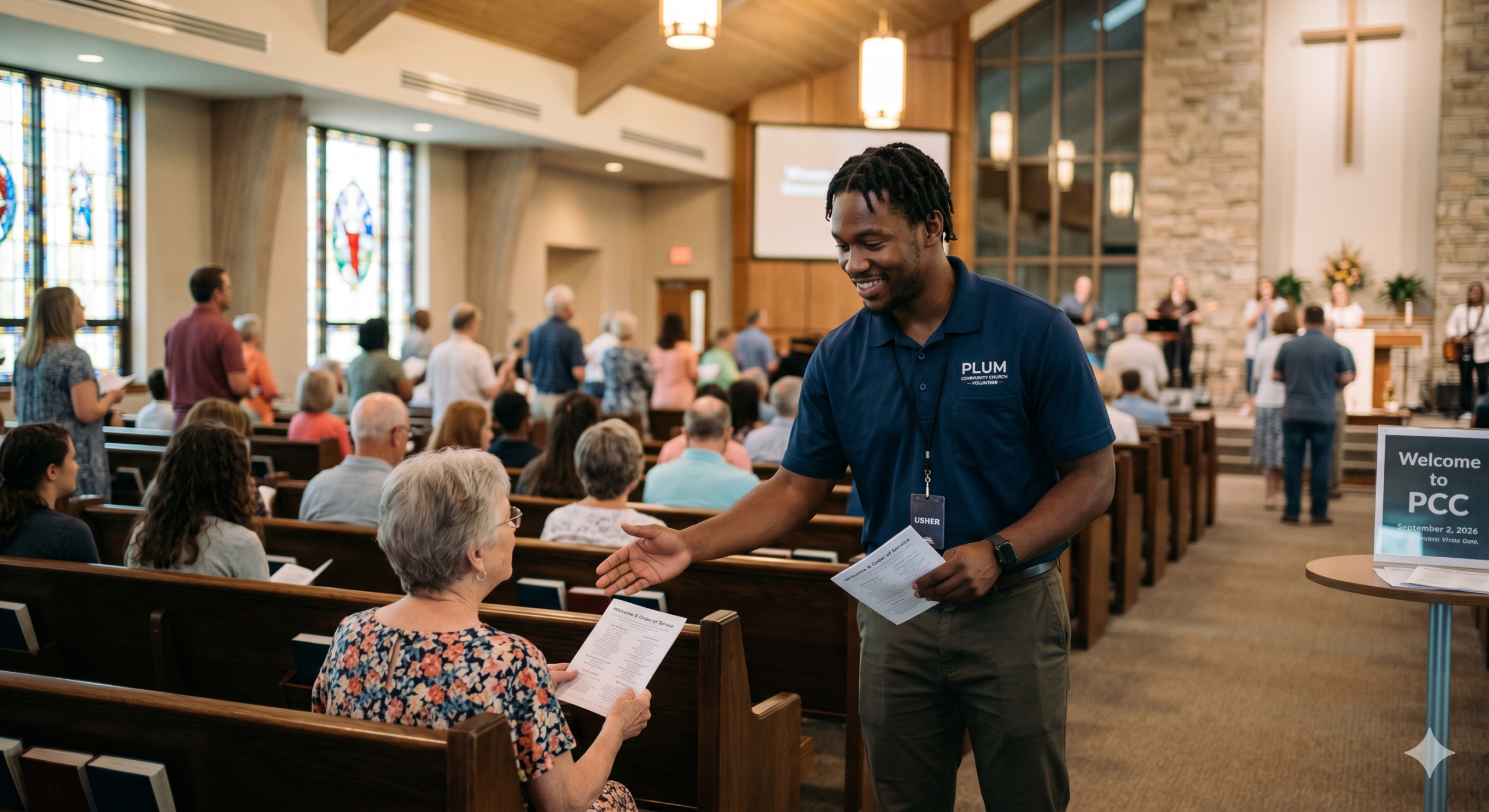
Many people don’t begin to drift from Christianity because they first decided, in a clean intellectual sense, that God was not there. The unraveling often begins closer to what they’ve seen and lived through. Many have spent time in churches where image seemed to matter more than reverence. They’ve watched spiritual language used with ease by people whose lives appeared shaped more by visibility than holiness. They have seen leaders speak about surrender while quietly building platforms, and they have felt how easily congregations can learn to perform intensity in ways that look polished, public, and strangely hollow.
That kind of experience leaves a mark. A person may not know how to name it at first, but they can feel that something is wrong. They may have come to church looking for God and slowly realized that much of what surrounded them was not the fear of God at all, but a culture of presentation shaped by the attention economy. In that currency, even worship can begin to feel unstable.
A song rises, and the room answers with raised hands and visible emotion, while phones appear in the air. Tears appear in person, and on social media, and what should have been directed wholly toward the Lord becomes entangled with not only being seen in plain view, but also being seen as Holy. That can be a hard thing to unsee, especially when the Bible tells us not to worship and pray to be seen.
Soon, the question becomes whether they were witnessing devotion or a religious form of cosplay, and more than that, does the room even know the difference? Those questions are not always cynical. Sometimes they are the first signs of discernment. But discernment, in a healthy state, has to keep moving toward truth. It cannot stop at exposure alone.
The Difference Between Deconstruction and Departure
It’s important to say plainly that questioning distorted forms of Christianity is not the same as abandoning Christ. There are times when believers need to unlearn false teaching, confront manipulative church culture, or reckon honestly with systems that have used the name of Jesus while refusing His character. Some forms of religion should be rejected. At times, believers should leave a church, and some leaders should no longer be trusted. Not every break with a religious structure is a break with God.
That distinction matters because the word deconstruction can cover very different realities. Sometimes it describes the painful work of separating biblical faith from human corruption. Elsewhere, the same word marks the path by which a person leaves not only falsehood, but Christ Himself. The danger appears when someone tears through the visible failures of the church and assumes they have therefore seen through Christianity altogether. A person may expose hypocrisy without ever truly reckoning with the Lord. They may identify what was counterfeit and still remain unable to recognize what is real.
Matthew 7:21–23 “Not everyone who says to me, ‘Lord, Lord,’ will enter the kingdom of heaven, but the one who does the will of my Father who is in heaven. On that day many will say to me, ‘Lord, Lord, did we not prophesy in your name…?’ And then will I declare to them, ‘I never knew you; depart from me, you workers of lawlessness.’”
Christ Himself does not speak naively about religious appearance. Spiritual performance does not impress Him, and outward displays that hide inward emptiness do not confuse Him.
That means Christians should never respond to stories of disillusionment by pretending the church has no falsehood in it. But it also means that exposing falsehood does not settle the question of Christ. It only brings the real question into clearer view.
When the Church Feels More Like a Stage
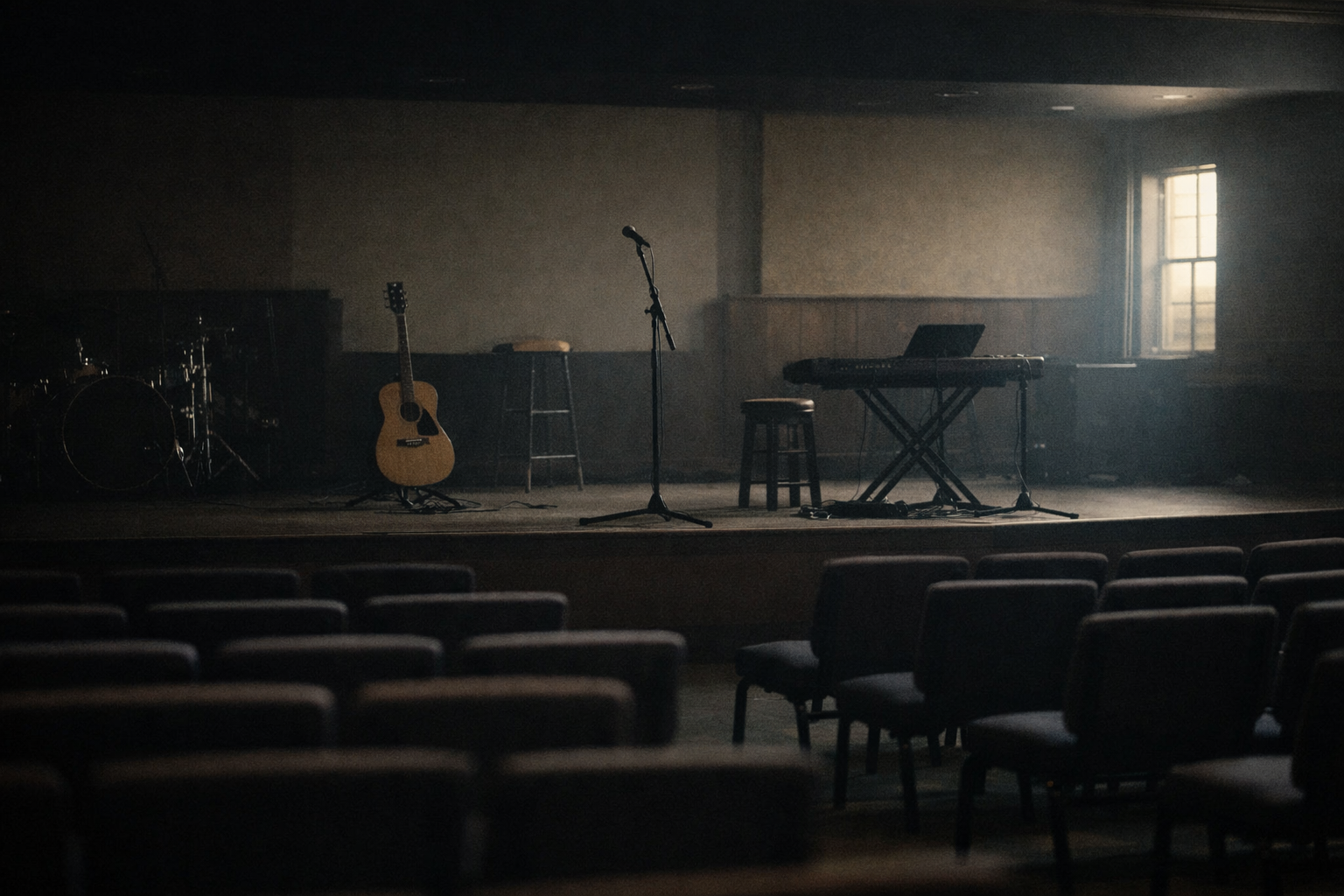
People are not only struggling with private spiritual doubt, but they’re also reacting to a religious environment that often feels curated. In parts of modern evangelical culture, sincerity has become difficult to distinguish from branding. Many churches are producing an experiential spiritual atmosphere instead of reverence, while people within it often mistake emotional intensity for the presence of God. When that happens long enough, faith can start to feel less like worship and more like participation in a Broadway performance.
Emotion itself is not false. Scripture speaks openly about joy and tears, and it also gives language for lament before God and trembling in His presence. What becomes dangerous is the way emotion can be turned outward and used as public evidence of spirituality. It can become something displayed rather than something offered. Once that shift takes place, people begin to feel that even their most tender moments with God are being swallowed by the logic of the crowd, the camera, the platform, and the content.
For someone already struggling, that can become a breaking point. They may never say, “I have rejected the claims of historic Christianity.” More often, what emerges is something closer to exhaustion: “I can’t do this anymore,” or “None of this feels real,” or “I don’t know whether I ever believed at all.” What they are describing is not always a philosophical conclusion. Sometimes it’s the weariness of trying to find God in a place where too much has been built around personality, performance, and emotional suggestion.
What this should cause is deep reflection within the walls of seeker or experiential churches. And let’s not confuse something, we are to experience God, but not at the hands of a fog machine or twinkling keys while the pastor says his closing remarks. It’s through the word, and yes, through praise and worship. But when the experience is more curated towards audience participation than the expression of who Christ is, the messaging becomes diluted.
Also, Christians don’t help by rushing to defend every visible expression of church life as though criticism itself were the danger. At times, the greater danger is the willingness to normalize what should trouble us. When the spectacle becomes bigger than God, we wave a false flag and believe in a false hope created by man, for man.
What People Are Often Really Leaving
When people say they are leaving Christianity, they are not always leaving the same thing. Sometimes they are walking away from legalism that taught obedience without grace, or from a shallow church life that offered belonging without repentance. Other people are reacting to a celebrity-driven culture wrapped in Christian language, or to a community where political identity grew louder than spiritual seriousness. Many have lived under homes or churches shaped by fear and control, or by abuse that was kept quiet. Others were formed by a version of faith that spoke confidently about doctrine and authority while bearing too little resemblance to the gentleness and truth of Christ.
That doesn’t mean their conclusions are therefore right. It does mean Christians should be careful not to misdescribe the pain. A person bruised by false shepherding may not first need to hear that they should have stayed more committed to church. They may need someone honest enough to admit that many things have been done in Christ’s name that Christ Himself condemns.
Ezekiel 34:2 “Ah, shepherds of Israel who have been feeding yourselves! Should not shepherds feed the sheep?”
The Lord has always spoken against those who misuse spiritual authority. He is not indifferent to it. He does not ask wounded people to pretend evil was good simply because it happened in a religious setting.
Yet even here, a deeper tragedy can unfold. A person may come to see clearly that what shaped them was false, and still go on to treat God Himself as the problem. They may confuse Christ with those who spoke about Him badly, or take the corruption of His people as proof that His words are empty. That’s often where disillusionment begins to harden into unbelief, and the enemy does his most productive work.
Why Disillusionment Cannot Carry the Weight of Truth
Disillusionment has a certain power because it feels like an awakening in the wiring of our souls. Something false has fallen away, and what was hidden has come into view. The elation when we “figure something out” plays into our very human desire to be right, or to be wrong about a person, place or thing. Especially when it comes to church. We often sit on a perch, waiting for someone to do something in God’s name that we don’t like, so we can throw stones at our creator, mostly because He is not apt to throw them back at us.
And while a person no longer feels naive and has uncovered clarity, it’s empowering, but disillusionment, by itself, is not wisdom. It can expose lies without teaching a person how to love what is true, dismantle false trust without leading anyone into holy fear, and can even make cynicism feel like maturity, because cynicism rarely suffers the embarrassment of hope.
That is part of what makes deconstruction spiritually dangerous when it loses sight of Christ. Once suspicion becomes the ruling instinct, almost everything starts to look compromised. Soon, churches appear performative and doctrine feels like a power play. Calls to obedience sound manipulative, and even confessions of certainty seem arrogant. A person may believe they’re now seeing clearly, when in fact they’ve become unable to recognize grace except in forms that ask nothing of them.
Scripture does not call believers into naivete, but neither does it call them into suspicion as a permanent posture of the soul.
Hebrews 12:15 “See to it that no one fails to obtain the grace of God; that no ‘root of bitterness’ springs up and causes trouble, and by it many become defiled.”
Bitterness is not the same thing as discernment. It may grow from real injury, but if it’s allowed to govern the heart, it begins to poison judgment. A bitter person may still speak accurately about certain failures while remaining unable to receive truth when it comes without disguise.
That’s why exposing religious fraud is not enough. The deeper question remains whether a person will humble themselves before God once the fraud is gone and not use it as a crutch.
Christ Does Not Fall With the Failure of His People
At the center of this whole subject is a distinction that has to be guarded carefully. Jesus Christ is not identical to the distortions that gather around His name. The church’s hypocrisy does not undo Him, and the exposure of false religion does not embarrass Him. In fact, no one in Scripture speaks more fiercely against religious pretense than Christ Himself.
Matthew 23:27–28 “Woe to you, scribes and Pharisees, hypocrites! For you are like whitewashed tombs, which outwardly appear beautiful, but within are full of dead people’s bones and all uncleanness. So you also outwardly appear righteous to others, but within you are full of hypocrisy and lawlessness.”
Jesus is not softer on hypocrisy than the modern critic is, or you. He sees through it completely. He condemns outward righteousness without inward life, and He rebukes lips that honor God while the heart remains far from Him.
That matters because many people leave the faith as though Christ were the one who failed them, when in truth it was often a false or thin form of Christianity that collapsed under its own dishonesty. This does not remove human responsibility. People are accountable for what they do in the church, and scandals in the body of Christ do real damage. But the failures of Christians are not evidence that Jesus is false. More often they reveal how easily people can speak His name without bowing to His lordship.
The answer, then, is not to defend the fraud. It’s to look again at Christ Himself, not a curated Jesus shaped by religious culture signaling, but the holy Son of God who calls people to repentance and truth, and to a life of obedience shaped by mercy and self-denial. It means turning from the Jesus who helps build platforms to the One who told His followers to take up their cross.
So, when you ask yourself, ” Who do I put my faith in, God or man?” If your answer is the latter, there will always be a reason to be disappointed and disillusioned.
A Life Without God Does Not Stay Empty for Long
When someone leaves the faith, it can feel at first like relief. There is no more pressure to maintain appearances, no more need to explain contradictions they can no longer bear, no more obligation to remain inside a world that now feels false. But life without God does not remain an empty space for long. The soul continues to seek meaning, innocence, belonging, and authority somewhere.
A person may say they have left religion behind, yet they still live before some vision of what is good and worth giving themselves to. Their loves, fears, loyalties, and judgments do not disappear. What often changes is where those things are placed. The weight once given to God may be shifted toward the self, or toward experience, or into a cause that begins to carry more meaning than it can sustain. The old forms may be gone, but the heart still worships.
Romans 1:25 “because they exchanged the truth about God for a lie and worshiped and served the creature rather than the Creator, who is blessed forever! Amen.”
We don’t move from worship into neutrality, hedonism, or antinomianism. Our hearts will always turn toward another center of trust, and that shift may not feel dramatic at first. It often comes quietly, settling into daily patterns of thought and desire until it begins to shape how a person understands themselves and the world around them.
At first, that new center may feel gentler because it asks for less surrender. It may even feel more honest because it allows distance from anything that once felt demanding or controlling. Over time, though, something else begins to surface. A life built without God does not become lighter in the deepest sense. It becomes more fragile. The self is left carrying weight it was never meant to bear. Meaning no longer arrives as something received but has to be held together from within. Guilt does not disappear, even if it’s renamed. Identity becomes something that must be maintained rather than something grounded in mercy.
That strain does not always show itself in obvious ways. In certain cases, the intensity once directed toward belief is redirected into new commitments, even if the commitments are intentionally non-committed to anything, which can feel steady until they begin to shift under pressure. Some carry a quieter awareness that something has been lost, even if they no longer know how to name it. The soul does not stop reaching. It simply reaches elsewhere, crafting idols that will ultimately fail.
Why the Church Must Tell the Truth About Itself
If Christians are going to speak faithfully into this subject, they have to resist two dishonest instincts. One is to shape a departure narrative that removes responsibility from the church itself. The other is to speak so gently about deconstruction that the danger of unbelief disappears from view. Neither path leads to clarity.
The church must be willing to speak honestly about its own distortions, but in all honesty, a distorted church, in many cases, can’t look at itself, because it’s lost in the chaos of the machine, or it’s willfully creating the machine and churning members out with reckless abandon, like an MLM program. These things should not be minimized or explained away. They should be named with sobriety, because repentance begins with truth.
1 Peter 4:17 “For it is time for judgment to begin at the household of God.”
The people of God are not called to defend themselves at all costs. They are called to walk in the light, even when that light exposes what is uncomfortable to see.
There is also a kind of language that becomes harmful in these moments because it tries to preserve stability by minimizing pain. It tells wounded people not to be offended or urges them to focus on Jesus while avoiding the sin that surrounds them. It warns against bitterness while leaving the conditions that produced it untouched. That approach does not reflect pastoral care; it reflects a very human concern for maintaining order without confronting what has been broken.
At the same time, the church shouldn’t frame every story of leaving as spiritually harmless simply because it began in pain. Pain can explain much, but it does not make every conclusion true. A person may be sinned against and still move further from the truth in how they respond. They may recognize hypocrisy and still use it as a reason to set aside the authority of Christ. Clarity requires the ability to hold both of those realities without confusion.
It also challenges believers to: #1 Read the Bible for themselves to develop a real relationship with God, and develop discernment. And #2, Do not use God or the church as air cover for your own rebellion.
What Faithfulness Looks Like in the Middle of Unraveling
There are people living in this tension right now. They have not fully walked away, but they no longer know what to do with what they’ve seen. Their trust has been shaken, and their instincts toward the church feel unsettled. Prayer may feel unfamiliar in ways it didn’t before, and they’re left wondering whether what is collapsing is false religion or something deeper.
In that place, not every unraveling is apostasy. There are times when God, in His mercy, exposes what should never have been trusted. What feels like collapse may in fact be the removal of things that had taken on too much weight. A person may lose confidence in a particular church culture, or in a leader, or in a way of practicing faith, and still be drawn into a clearer knowledge of Christ through that loss. The experience can be disorienting, but it’s not the same thing as leaving the Lord.
The question becomes where that unraveling leads. It may bring someone into a deeper dependence on Christ, or leave them hesitant to trust anything that challenges them. Develop more honest engagement with Scripture, or create distance from any authority that was not chosen on personal terms. It may help them recognize the Shepherd’s voice more clearly, or quiet every voice outside their own.
John 6:68–69 “Simon Peter answered him, ‘Lord, to whom shall we go? You have the words of eternal life, and we have believed, and have come to know, that you are the Holy One of God.’”
Peter’s words do not come from a place of ease. They come from the recognition that life cannot be found elsewhere. That recognition remains, even when other things begin to fall apart. Our hearts, once the Lord’s, always cry to Him, even when we don’t want it to. We know His voice.
How Christians Should Respond to Those Who Are Leaving
Christians should approach this subject with a sense of grief rather than distance. It’s easy to respond harshly when someone’s story feels unsettling. It’s also possible to treat those stories in a way that quietly elevates departure as though it carries a kind of insight others lack. Neither approach reflects the steadiness that comes from truth.
A faithful response begins with listening, because not every criticism of the church is fair, but many reflect real failures that should not be dismissed. There are wounds, contradictions, and patterns that need to be acknowledged without defensiveness. That requires a willingness to see clearly, even when it reflects poorly on the church.
There also needs to be clarity about Christ, because the goal is not to draw someone back into the same patterns that caused harm. “Oh, you’ve been hurt by this church? Come to my church, it’s much better!” Our posture should be to help them see that the collapse of what was false does not mean that Christ Himself has failed. In some cases, the most honest response is to agree that something was wrong, while also refusing the conclusion that everything is empty.
That kind of response cannot be rushed. It requires patience, humility, and a willingness to remain present in conversations that don’t resolve neatly or quickly. Many times we want to help, until the help becomes arduous or too emotionally complex, but the real way we show up is to listen, offer wisdom, and point to Christ. The best thing someone can do is get more into the Word after experiencing God’s love through His people.
When Deconstruction Becomes a Life Without God
There is a deeper sorrow when deconstruction moves beyond disillusionment and settles into unbelief. What may begin as a response to hypocrisy can become a rejection of the possibility that God speaks or acts at all. Christ is no longer misunderstood. He is set aside.
At that point, what is lost is not only a sense of belonging or a connection to a community, but also the knowledge of God Himself. It’s the recognition that human life is not self-contained, but lived before the One who made it.
Psalm 14:1 “The fool says in his heart, ‘There is no God.’”
This is not a statement meant to provoke contempt. It’s a statement that names what happens when the heart turns away from God. That turn doesn’t always feel like rebellion; it can feel thoughtful, calm, or even morally serious. That’s what makes it difficult to recognize.
A life without God may still speak about justice, dignity, or healing. Those words can carry emotional weight, but when they are separated from the One who gives them their grounding, something begins to thin out beneath them. What remains may still feel meaningful, yet it lacks the depth that once held it together.
Christ Remains When Everything False Falls Away
There is a final truth that cannot be set aside. When everything false is exposed, Christ doesn’t fall with it. He remains.
He is not diminished by the church’s failures or reshaped by its erosion. His character doesn’t depend on how faithfully His people represent Him. When worship becomes spectacle or leadership becomes compromised, Christ is not the one being revealed as empty. He has always stood apart from those distractions. God is fine before, during, and after us. He is God. Not A god, but The God. Nothing exists, even this article, without His hand and care.
What is needed, then, is not distance from Christ, but a clearer sight of Him. When false forms of religion collapse, it doesn’t create a new kind of freedom apart from God. It brings a person back to the question of whether they will come before the real Christ rather than the substitutes that once stood in His place.
John 1:4–5 “In him was life, and the life was the light of men. The light shines in the darkness, and the darkness has not overcome it.”
That light is not undone by failure, and it’s not overcome by what collapses around it. The failures of the church are real, and the wounds that come from them can run deep. Those failures, however, don’t have the power to undo Christ.
The question that remains is what a person will do once what is false has been stripped away. When the noise begins to settle, and familiar structures give way, Christ is still there as He has always been, not dependent on the church’s ability to represent Him well, and not altered by the ways it has failed. Flee to Him; He is our only hope.