
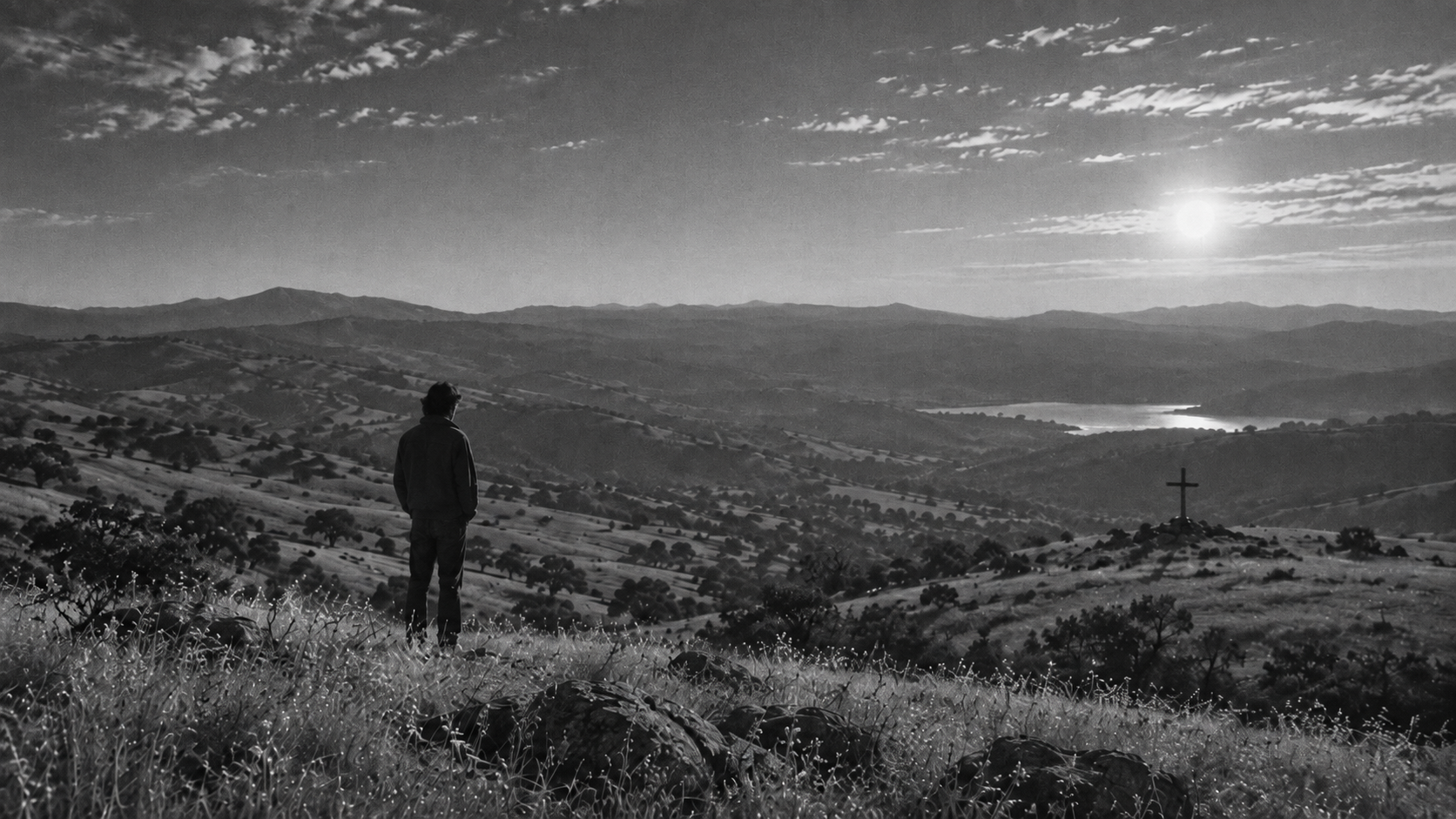
Most people who ask about salvation aren’t really asking for a definition. They’re asking whether there’s a way out of something they can feel but can’t quite name, a weight that sits underneath the good days and gets louder on the bad ones. They want to know if the thing Christians talk about is real, and if it is, what it actually requires of them. That question deserves a real answer, not a churchy one.
Salvation isn’t a reward for good behavior. It isn’t a badge for people who finally got their act together. It’s a rescue, offered to people who haven’t and won’t, and it starts the moment someone stops trying to qualify for it and simply receives it.
Romans 10:9
Because, if you confess with your mouth that Jesus is Lord and believe in your heart that God raised him from the dead, you will be saved.
That’s the whole hinge of it. Not a list of requirements. Not a scorecard. Belief in the heart, confessed with the mouth, and the door opens.
Believe and Confess
Believing in Jesus isn’t the same as believing facts about him. Plenty of people accept that a man named Jesus lived, taught, and died in first century Judea without ever trusting him with anything. That kind of belief costs nothing and changes nothing. The belief Scripture is talking about is different. It’s the kind that shifts weight, the kind where a person stops carrying their own case and hands it over.
Confessing with the mouth isn’t a magic formula either, as if the right words unlock a door that stays shut otherwise. It’s the natural overflow of what’s already happened inside. When someone actually believes that Jesus died for them and rose again, saying so out loud isn’t hard. It’s the first honest thing they’ve said in a while.
This is where a lot of people get stuck without realizing it. They’re waiting to feel ready, to clean something up first, to have their doubts fully resolved before they’ll say the words. But faith was never meant to follow certainty. It’s supposed to precede it. Believing and confessing come first, and the assurance that grows out of that relationship comes after, not before.
The Wrong Question
Here’s where the honest questions start showing up. Do I need to be perfect first? Do I have to fix my life before God will take me?
No. Nobody qualifies for salvation by being good enough, because nobody is. Every person carrying around guilt for what they’ve done is in the same boat as the person who thinks they’ve got it together. The ground is level at the foot of the cross, and it has to be, because if perfection were the entry requirement, the door would be shut to everyone.
But there’s a question that reveals something more than “do I need to be perfect” ever could, and it’s the one people rarely say out loud. What can I get away with? If someone finds Christ, is that person now free to sin as much as they want and still make it to heaven?
Anyone asking that question with real intent behind it should take a hard look at what they actually believe. Not because grace has limits, but because a heart that’s genuinely been changed by Christ doesn’t go looking for the edges of forgiveness the way a heart still in love with sin does. Someone who’s been rescued from drowning doesn’t spend their first breath asking how close to the water they can stand again. Wanting to know how far you can push sin and still be covered is the posture of someone using grace as a shield, not someone who’s actually met the one who bled for it.
Jesus doesn’t remove sin from the believer’s life like a switch flipped once and never touched again. What he does is change what sin means to a person. It stops being a comfortable habit and starts being an intrusion, a thing that grieves rather than satisfies. The old life and the new life can’t share the same appetite forever, and that shift in appetite is one of the clearest signs that something real has taken hold.
A Gift, Not a Wage
Salvation can’t be purchased, not with good deeds, not with religious performance, not with a lifetime of trying hard enough. It’s a gift, offered freely to people who bring nothing to the table but their need for it.
Ephesians 2:8-9
For by grace you have been saved through faith. And this is not your own doing; it is the gift of God, not a result of works, so that no one may boast.
That should settle something for anyone who’s spent years feeling like they have to earn their way into God’s good graces. There’s no ledger to balance, no quota of righteousness to hit. The debt was already paid by someone else, and the only thing left to do is accept it.
But faith that actually takes root doesn’t sit still. It produces something. Obedience isn’t the toll a person pays to keep their salvation, it’s the fruit that naturally grows once the root has changed. A person who’s truly believed starts wanting what God wants, slowly and imperfectly, but really. Faith without any resulting change isn’t stronger faith, it’s a sign that nothing actually took hold.
This is the part that trips people up the most, because it can sound like a contradiction. Free gift, and yet it changes everything about how a person lives. But it isn’t a contradiction at all. A seed planted in soil doesn’t earn the right to grow, it simply grows because that’s what a living seed does. Obedience works the same way. It isn’t the price of admission, it’s the evidence that life is actually there.
Walk, Not Sprint
One of the most damaging ideas floating around, inside and outside the church, is that becoming a Christian means becoming perfect overnight. It doesn’t work that way, and expecting it to sets people up to quit the first time they fail.
Christianity isn’t measured in a single moment of flawless performance. It’s measured in trajectory. The question worth asking isn’t “am I sinless,” because the answer to that will always be no. The question worth asking is simpler and far more revealing: looking back at where you were a year ago, are you closer to Christ now, or further away?
That question cuts through the noise. Someone can point to specific failures this year and still be closer to God than they were twelve months ago, because closeness isn’t measured by the absence of struggle. It’s measured by direction. Are the things that used to define a person losing their grip? Is prayer less foreign than it used to be? Is there less patience for sin and more hunger for God, even if that hunger is still small and inconsistent?
That’s why it’s called a walk and not a sprint. A sprint is judged by a single burst of effort, all or nothing, finished in seconds. A walk is judged over the long haul, one step following another, with plenty of stumbles along the way that don’t end the journey. Nobody walking a long road expects to arrive at the destination in the first mile, and nobody following Christ should expect full maturity in the first year, or even the first decade. The walk is the point. Growth happens in the walking, not in some imagined finish line reached by trying harder for a weekend.
Where This Leaves You
None of this requires cleaning up first. It doesn’t require having every doubt resolved or every bad habit broken before taking a step toward Christ. It asks for something much simpler and much harder at the same time: a heart willing to believe, and a mouth willing to say so.
Romans 10:13
For everyone who calls on the name of the Lord will be saved.
Everyone. Not the ones who’ve earned it, because nobody has. Not the ones who’ve got their life sorted out, because nobody does. The invitation stands open to anyone willing to stop asking what they can get away with and start asking what it would mean to actually belong to him.
That’s salvation. Not a reward waiting at the end of good behavior, but a gift handed to people who know they need it, and a walk that begins the moment they reach out and take it.