




If the Gospel is the good news, then it only makes sense once we understand the reality that makes it necessary.
Many people assume humanity is fundamentally good and that our deepest problems come from poor education, broken systems, or unhealthy environments. From that perspective, if society improves, people will improve with it. The solution, then, is reform, progress, and a better world built by better human effort.
Scripture presents the problem differently. The central issue is not merely outside of us but within us. The human heart itself has been affected by sin, and that condition shapes what we desire, what we build, and how we live. This is what theology has long called the doctrine of original sin.
The Doctrine of Original Sin
The roots of this doctrine are found in Genesis. God created Adam and Eve and placed them in the Garden of Eden, where they lived in direct fellowship with Him. They were given one command, and when they chose to disobey it, sin entered the world and fractured that relationship.
What followed was not limited to the first man and woman. Their rebellion introduced a condition that extended to every generation after them.
Romans 5:12
“Therefore, just as sin came into the world through one man, and death through sin, and so death spread to all men because all sinned.”
Humanity did not simply inherit the consequences of Adam’s sin. Humanity inherited a nature inclined away from God. That does not mean every person expresses sin in the same way or to the same degree, but it does mean that no part of human life remains untouched by the fall. Our thoughts, desires, motives, and decisions all bear the marks of that corruption.
This is why Scripture does not speak of humanity as morally neutral or spiritually well with a few surface-level problems. It speaks of a race that has been deeply affected by sin at the root.
The Limits of Human Righteousness
Because of this, the Bible does not present humanity as capable of restoring itself. The problem is too deep for that.
Romans 3:10–12
“None is righteous, no, not one; no one understands; no one seeks for God. All have turned aside; together they have become worthless; no one does good, not even one.”
That is difficult for modern people to accept because it cuts against the belief that people are naturally good. Yet history gives us no reason to be naïve about human nature. Across cultures and generations, the same patterns continue to surface. Pride, envy, selfishness, violence, and corruption are not rare interruptions in an otherwise clean story. They are constant features of human life.
What we often describe as social breakdown reflects something deeper than circumstance. The human problem is spiritual before it is societal. Even the best systems cannot cure a heart that is estranged from God.
That is why salvation cannot come through education, morality, politics, or reform. Those things may restrain certain outward expressions of evil, but they cannot remove guilt, change the inner person, or reconcile sinners to a holy God.
The Holiness of God
This is where the seriousness of sin becomes even clearer. Sin is not only destructive because it damages human relationships or produces disorder in the world. Its deepest offense is that it stands in opposition to the character of God Himself.
God is perfectly holy. He is not merely better than humanity or more righteous than we are by degree. His nature is entirely pure, without corruption, compromise, or darkness of any kind. Because of that holiness, sin cannot exist in His presence without judgment.
Habakkuk 1:13
“You who are of purer eyes than to see evil and cannot look at wrong…”
Humanity was created to live in fellowship with God, yet sin has brought separation where there was once communion. The issue is not simply that people fail to live up to an ideal. The issue is that sin puts humanity in direct conflict with the God who made us.
No amount of personal effort can resolve that tension. Good behavior cannot erase guilt. Religious activity cannot undo rebellion. Moral seriousness cannot heal what sin has broken. If salvation depended on human effort, no one would be saved.
Why Salvation Is Necessary
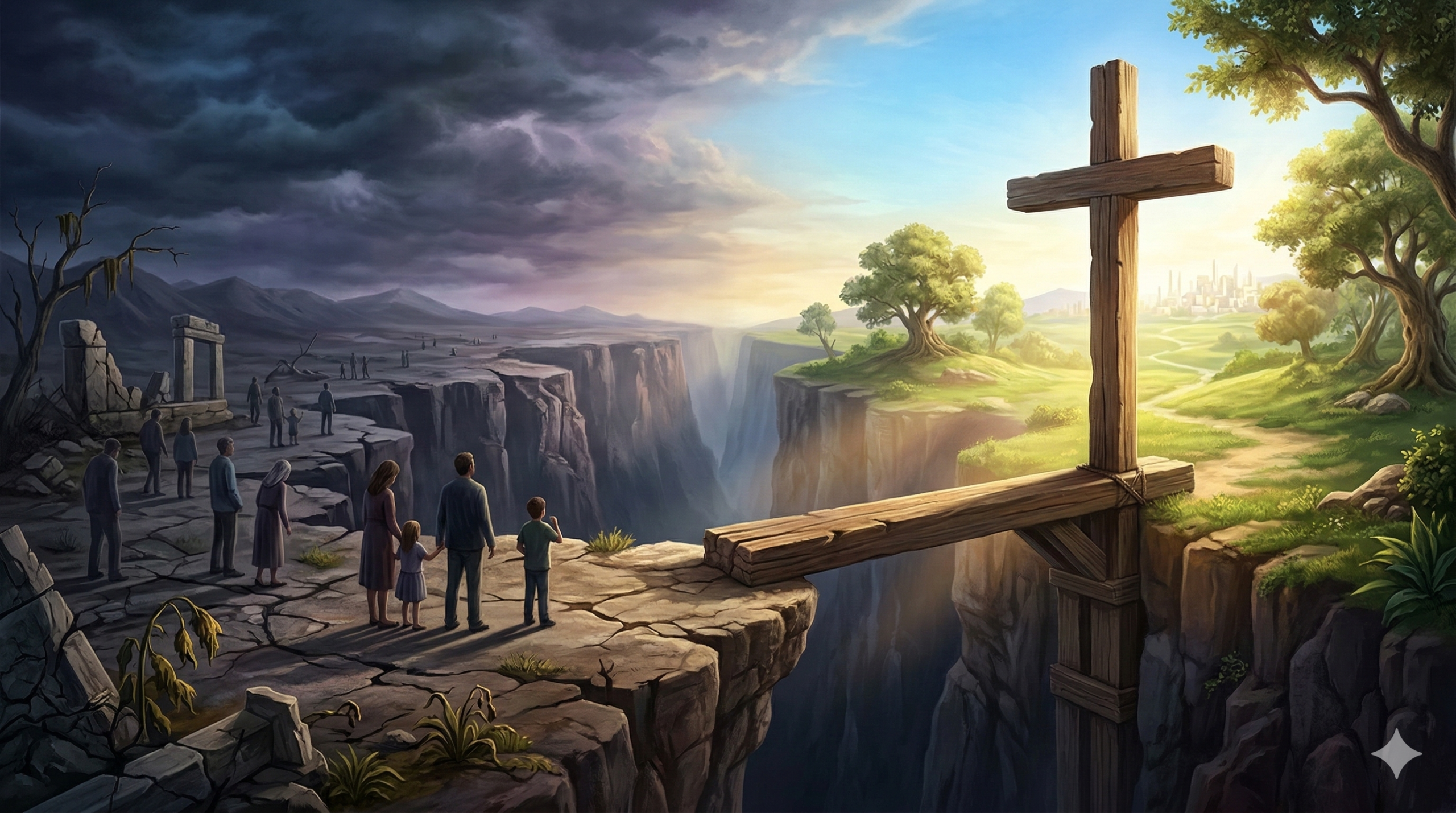
Salvation is necessary because the human condition cannot be corrected from within. We do not need mere improvement. We need rescue. We need forgiveness. We need reconciliation.
This is where the Gospel becomes such good news.
God did not leave humanity in its fallen condition. He acted in mercy. He sent His Son, Jesus Christ, into the world to accomplish what sinners could never accomplish on their own. Jesus lived in perfect obedience to the Father, fulfilling the righteousness humanity had failed to render. Then, in His death, He took upon Himself the judgment that sin deserved.
Through His death and resurrection, forgiveness became possible and the way back to God was opened.
Romans 6:23
“For the wages of sin is death, but the free gift of God is eternal life in Christ Jesus our Lord.”
Without some understanding of humanity’s condition, the cross can seem excessive or unnecessary. But once sin is seen for what it is, and once God’s holiness is taken seriously, the work of Christ comes into focus. The cross is not an overreaction. It is the only sufficient answer to the problem of sin.
Humanity needs salvation because humanity cannot heal itself. We cannot remove our guilt before God, and we cannot restore by our own strength what sin has destroyed. Left to ourselves, reconciliation would remain out of reach.
The Gospel is the announcement that God has made a way where none existed. In Jesus Christ, mercy and justice meet, and sinners are offered what they could never earn for themselves: forgiveness, righteousness, and peace with God.
To understand that is to begin understanding the Gospel itself.