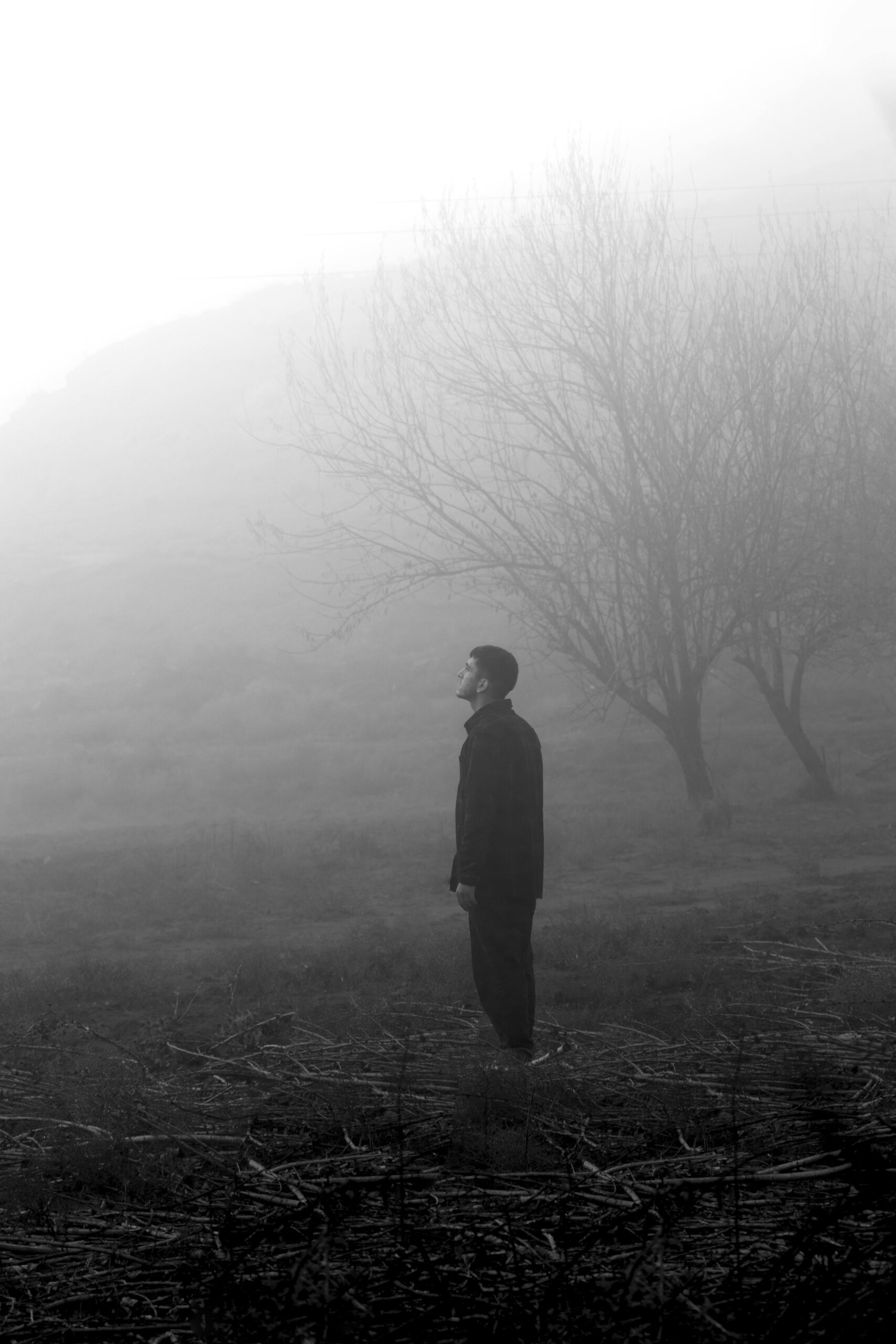






Passivity Rarely Looks Dangerous at First
Most men do not ruin their lives in a moment. More often, decline comes quietly. It works through neglect, delay, distraction, excuse, and a growing unwillingness to deal honestly with what God is putting in front of them.
That is why passivity can be difficult to recognize in its early stages. It does not usually present itself as open rebellion. It looks ordinary. A man delays responsibility, avoids hard conversations, neglects his spiritual life, tolerates habits that weaken him, and slowly adjusts to a version of life that asks very little of him. From the outside, that drift may not seem dramatic. Over time, though, it carries consequences that are anything but small.
A passive man may still appear stable. He may keep a job, pay his bills, and move through daily life without drawing much concern. Yet what is missing becomes more important than what remains. He is absent where he should be present, quiet where he should speak, and spiritually dull where he should be alert. The collapse often begins long before anyone calls it one.
Drift Begins Beneath the Surface
Passivity does not begin with outward collapse. It begins inwardly, in the private life of a man before it ever becomes visible in his habits. He grows less serious about sin, less careful with truth, less disciplined in prayer, and less willing to examine himself before God. Comfort starts to matter more than conviction, and self-justification becomes easier than repentance.
Men often explain this drift in terms of circumstance. They point to exhaustion, pressure, discouragement, frustration, or the demands of life. Those things can be real, and they should not be dismissed lightly. Still, beneath them there is often a deeper spiritual weakening taking place. A man stops pursuing God intentionally and begins living mostly in reaction to whatever is immediate, easier, or more soothing.
Scripture speaks directly to that danger. Hebrews 2:1 “Therefore we must pay much closer attention to what we have heard, lest we drift away from it.”
That warning is sober because drift does not require hatred of God. It only requires inattention. A man does not have to make a public decision against faithfulness in order to begin losing ground. He only has to stop taking his inner life seriously.
Comfort Becomes a Quiet Master
Many passive men are not chasing collapse. They are chasing relief. They want quiet from the weight of responsibility. They want escape from pressure. They want life to require less than obedience often does. That desire may show itself through entertainment, laziness, lust, endless scrolling, emotional withdrawal, or other forms of distraction that keep a man occupied without making him fruitful.
Rest is not the enemy. Men need rest, and Scripture does not praise exhaustion for its own sake. The problem begins when comfort stops being a gift received in its proper place and becomes a principle that governs life. Once that happens, obedience starts to feel intrusive. Discipline feels unreasonable. Responsibility feels like a burden rather than part of a man’s calling before God.
Immaturity often survives because a man keeps choosing what eases him in the moment instead of what would actually strengthen him. He becomes more practiced at avoidance than endurance. What should have been resisted gets accommodated. What should have been carried gets delayed.
Proverbs 24:30–31 “I passed by the field of a sluggard, by the vineyard of a man lacking sense, and behold, it was all overgrown with thorns; the ground was covered with nettles, and its stone wall was broken down.”
That image is helpful because neglect leaves visible traces. A field does not become overgrown in an instant. The damage comes through steady disregard. The same is true in a man’s life. Boundaries weaken, habits soften, spiritual attentiveness fades, and eventually the condition of the heart begins to show itself in ways that can no longer be hidden.
Responsibility Cannot Be Avoided Without Cost
Passivity is not simply inactivity. It is a refusal to carry what God has placed in front of a man. Sometimes that refusal is obvious. Sometimes it hides behind competence in other areas. A man may work hard in public and still neglect his marriage, avoid his children, ignore his need for repentance, or resist the accountability he knows he needs.
That is why passivity has to be understood in moral and spiritual terms, not merely practical ones. The issue is not that a man is unproductive in some general sense. The issue is that he is failing to take ownership where faithfulness is required.
Biblical manhood is tied to responsibility. A man is not called to control everything around him, but he is called to answer honestly before God for what has been entrusted to him. He is called to remain present where love requires perseverance, to repent where he has sinned, and to lead where leadership becomes necessary.
The pattern goes back to the beginning. Adam was not missing from the garden. He was there, yet he did not act faithfully when the moment required it. That same form of failure remains familiar. A man can be physically present while spiritually withdrawn. He can occupy space without carrying responsibility. Over time, the damage done by that kind of passivity becomes painfully real.
What a Man Will Not Govern Will Begin to Govern Him
A man who does not deal seriously with his appetites will eventually be shaped by them. Passivity creates that kind of vulnerability. It leaves space for other things to take rule, and something always moves in to fill the void. If a man is not pursuing God deliberately, submitting himself to Scripture, and resisting the pull of the flesh, he does not remain neutral. He becomes easier to govern by whatever already has a hold on him.
For one man it may be lust. For another it may be fear, pride, anger, self-pity, distraction, or an insistence on comfort at all costs. The specific form may differ, but the spiritual principle remains the same. Where vigilance fades, other forces gain room to grow.
This is why alertness matters so much in the Christian life. 1 Corinthians 16:13 “Be watchful, stand firm in the faith, act like men, be strong.”
That verse is not a call to posturing. It is a call to steadiness, vigilance, and spiritual seriousness. A passive man gradually loses that posture. He stops watching. He stops standing firm. He stops resisting with any consistency. When that happens, the inner life does not stay empty for long.
Isolation Allows Drift to Deepen
Passivity survives more easily in private. Isolated men can appear functional for a long time while quietly decaying beneath the surface. That is one reason godly brotherhood matters. A man needs the church, sound doctrine, and other faithful men around him who are willing to speak truthfully.
Brotherhood does not solve everything, but it makes drift harder to protect. Other men can often see what a passive man has learned to excuse. They can ask questions he has avoided. They can challenge habits that have become normal to him. That kind of interruption may feel uncomfortable, but it is a mercy.
A man who never invites correction will usually remain enclosed within the very patterns that are weakening him. Bringing life into the light does not guarantee immediate change, but it does remove one of passivity’s favorite shelters. God often strengthens men through ordinary means: truth spoken plainly, sin named honestly, counsel received humbly, and discipleship lived out in the life of the church.
Men were not meant to mature in isolation. Without correction, encouragement, and real accountability, drift becomes much easier to normalize.
Grace Does Not Leave a Man Passive
Calls to responsibility can land in two wrong ways. One man hears them and falls into condemnation. Another hears about grace and treats it as permission to remain unchanged. Neither response is faithful.
The grace of God does not excuse passivity. It rescues men from sin and trains them for obedience. Grace does not tell a man to remain asleep in patterns that dishonor God. It brings him into the light, confronts what needs to be confronted, and leads him toward repentance.
That is why the gospel matters so much here. A passive man does not merely need stronger resolve. He needs truth, forgiveness, renewal, and a restored willingness to obey God honestly. He needs to stop hiding behind explanation and come before the Lord without pretending.
Titus 2:11–12 “For the grace of God has appeared, bringing salvation for all people, training us to renounce ungodliness and worldly passions, and to live self-controlled, upright, and godly lives in the present age.”
Grace is not indifferent to what a man is becoming. It teaches him to renounce what once ruled him and to walk in a different way.
The Way Back Begins with Honesty
A passive man usually does not need more information first. He needs honesty. He needs to tell the truth about where he has become lazy, indulgent, numb, fearful, distracted, or spiritually checked out. He needs to stop living in relation to the man he imagines himself to be and deal with the one he actually is before God.
That is also where hope begins. Drift does not have to be permanent, but recovery starts when denial ends. Repentance means facing what has been neglected, returning to the Word of God with seriousness, praying again with sincerity, and bringing hidden struggles into the light instead of quietly managing them.
In many cases, that recovery will not look dramatic. It will look ordinary, and that is part of its faithfulness. Neglected responsibilities begin to be faced again. Confession replaces concealment. Scripture is opened when the flesh would rather escape. A man starts showing up in places where he had grown absent. Over time, those ordinary acts of repentance and obedience begin to rebuild what passivity had weakened.
Why This Matters
The cost of passivity is rarely contained within the man himself. Families feel it. Churches feel it. Friendships feel it. Children feel it. When a man refuses responsibility, the damage usually reaches beyond him.
That is why this subject matters. Manhood is not finally about personality, charisma, image, or untapped potential. It is about faithfulness under God. Faithfulness requires resistance to the slow pull of passivity before it settles into a way of life.
Drift becomes likely when a man stops paying attention to his soul, begins organizing his life around comfort, resists correction, and tries to live apart from the Word, prayer, the church, and a serious posture toward sin. None of that happens all at once. The collapse is usually prepared in quieter places long before it becomes visible.
But by the grace of God, a man does not have to remain there. He can repent, return to neglected obedience, and begin again in the ordinary work of faithfulness. What passivity has worn down is not beyond God’s power to restore.