




The Question That Follows Real Pain
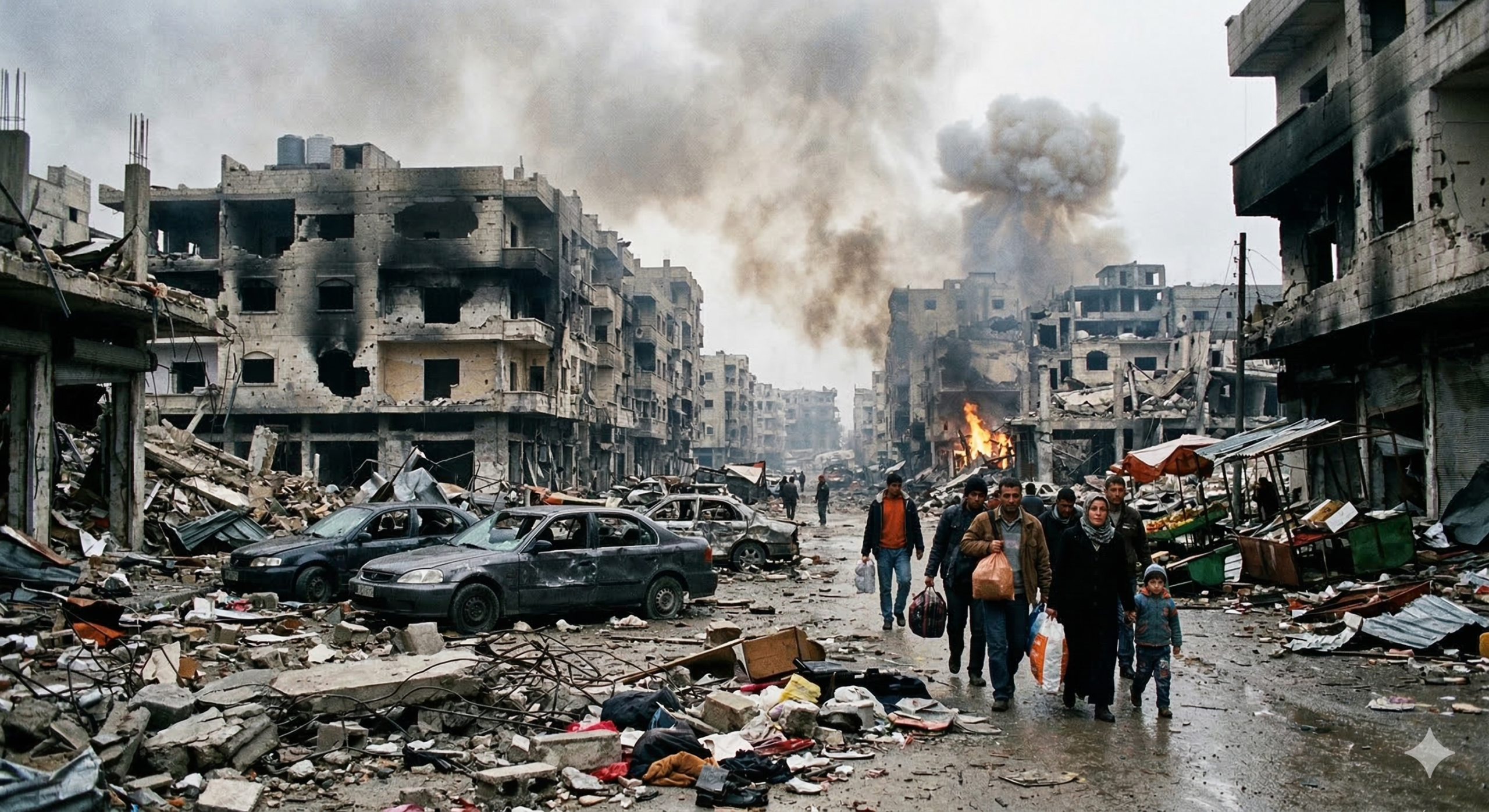
For many people, this question does not begin in a classroom or in a debate. It rises out of grief. It comes after a funeral, a diagnosis, a betrayal, an act of cruelty, or a loss that leaves the world feeling less stable than it once did. At that point, the question is not abstract. It has weight in it.
If God is loving, why is the world like this?
That question has unsettled people for a very long time, and it is not difficult to understand why. The idea of a good and loving God can feel hard to hold together with a world marked by violence, sickness, injustice, and death. Public history gives people enough reason to ask it, and private life often gives them more. Even in quiet homes and ordinary families, there are wounds that remain for years.
Christianity does not treat that question as shallow or hostile by definition. Scripture itself speaks about suffering with unusual honesty. The Bible does not ask people to pretend pain is smaller than it is, and it does not answer tragedy with polished religious language. It speaks about fear, grief, oppression, affliction, injustice, and death as realities people actually live through. That matters, because the Christian answer to evil does not begin by shrinking what hurts. It begins by telling the truth about the world we are in.
The Christian View Begins With a Fallen World
Christianity does not describe the world as basically sound but badly managed. It says something more serious has happened. The world is fallen.
According to Scripture, God did not create evil as part of the goodness of His creation. He made the world good, ordered, and fitting to His wisdom. Human rebellion brought a rupture into that order. Sin did not remain a private matter between man and God. Its effects moved outward into every part of life. What had been made for life now bears death within it. What had been made for peace now carries disorder, sorrow, and decay.
Genesis 1:31
“And God saw everything that he had made, and behold, it was very good.”
That does not remove the difficulty of suffering, and Christianity never claims that one doctrinal answer can carry the full emotional weight of human loss. Still, it does change the starting point. The Christian claim is not that God designed a cruel world and asked people to trust Him in the middle of it. It is that we live in a creation that has been deeply disordered by sin, and that much of what now feels normal is, in fact, a sign that the world is no longer what it was meant to be.
This helps explain why suffering feels wrong even to people who do not believe in God. Death does not feel fitting in the deepest sense. Neither do hatred, abuse, humiliation, or the destruction people bring into each other’s lives. We may become familiar with these things, but we do not receive them as good. Christianity explains that instinct by saying evil is not part of the original goodness of creation. It is a corruption within it.
Evil Is Not Only Something We Suffer Under
People often speak about evil as though it belongs mainly to tyrants, violent criminals, war zones, and public atrocities. Those things are evil, and it is right to say so plainly. But the Bible does not allow us to speak as though evil lives only in extreme people or faraway situations.
Scripture brings the matter much closer. It tells us that sin is not only a force at work in societies and institutions. It is also personal. Human beings do not merely suffer under evil. We also take part in it. Sometimes that participation is visible and severe. Sometimes it is quiet enough to look respectable. But it is still there. Pride, deceit, resentment, lust, selfishness, dishonesty, and cruelty are not strange intrusions into an otherwise innocent humanity. They reveal what sin has done to us.
That matters because people often ask the question of evil as though they are standing outside the ruined condition of the world, assessing God from a neutral place. Christianity does not grant us that distance. We are not detached observers looking at a badly governed world. We belong to the same human race that has turned from God and damaged what He made.
That does not mean every person’s suffering can be traced to some immediate personal sin, nor does it mean every tragedy can be explained by a simple moral equation. Scripture does not speak that crudely. It does mean that the misery of the world cannot be understood without reckoning with human sin. Evil is not only something that happens around us. It also moves through human hearts and lives.
Why God Has Not Brought History to Its End Yet
This is the point where the question becomes sharper. If God can stop evil, why does He allow history to continue as it does? Why do cruelty, disease, oppression, and death still remain?
No Christian answer removes all mystery here. Anyone who claims to explain every tragedy goes further than Scripture does. Some losses remain painful and difficult for a lifetime. Some events seem impossible to reconcile from where we stand. Christianity does not offer a neat explanation for every death, every assault, every disaster, or every wound that a person carries in silence. It does, however, say enough to keep us from thinking the world is meaningless or morally ungoverned.
The delay of final judgment is not proof that God is absent. In part, it reveals His patience. If God had brought immediate judgment when sin first entered human history, humanity would have fallen under that judgment at once. People usually long for instant justice when thinking about the sins of others, but Scripture reminds us that we also stand in need of mercy.
That patience should not be mistaken for approval. God is not morally relaxed about evil, nor has He lost interest in what it does. The Bible speaks of a day when what is hidden will be brought into the light, when every wrong will be answered by divine justice, and when evil will no longer move through creation unchecked. History is not drifting without direction. It is moving toward an end appointed by God, even if that end can feel very far away to those living in the middle of suffering.
2 Peter 3:9
“The Lord is not slow to fulfill his promise as some count slowness, but is patient toward you, not wishing that any should perish, but that all should reach repentance.”
For someone in pain, that may not feel sufficient in the moment. It is still more solid than the alternatives. A universe without God offers no final judgment, no lasting justice, and no assurance that evil means anything more than pain without resolution. Christianity does not tell us everything we want to know, but it does tell us that history is not random.
Love Is Not Measured Only by the Absence of Pain
Part of the difficulty here comes from the way love is often imagined. Many people assume that if love is real, suffering should steadily disappear. When it does not, they conclude that love must be absent.
That way of thinking feels natural when pain is close, but it is too narrow even for ordinary human relationships. There are times when genuine love allows difficulty, speaks unwelcome truth, or refuses immediate relief. A parent may deny something a child wants because wisdom requires it. A doctor may cause pain while treating a deeper problem. A faithful friend may speak honestly at the risk of being misunderstood. None of those examples solves the problem of evil, and they should never be used lightly around deep grief. Even so, they remind us that pain by itself is not a trustworthy measure of whether love is present.
Christianity does not say that everything painful is good. It does not tell people to rename evil as a hidden blessing. It says something more careful. The presence of suffering does not, by itself, disprove the love of God. If it did, then the Christian understanding of Christ would collapse under the weight of the cross.
God’s love is not shown by making a fallen world feel painless. It is shown in a deeper way than that.
God Did Not Remain Far From Human Suffering
At the center of Christianity is not an abstract explanation but the person of Jesus Christ. That matters more than people sometimes realize. The Christian God is not presented as a distant force watching human sorrow from a place of safety. In the incarnation, God entered the world that sin had marred. He took on flesh and lived within the conditions that trouble us.
Jesus knew grief, exhaustion, rejection, betrayal, injustice, violence, and death. He did not sin, yet He entered fully into a world marked everywhere by sin’s effects. He was not shielded from cruelty. He was despised, falsely accused, abandoned, beaten, and crucified. Christianity does not ask suffering people to trust a God untouched by pain. It tells them that God has drawn near to human suffering in Christ.
Isaiah 53:3
“He was despised and rejected by men; a man of sorrows, and acquainted with grief.”
That does not dissolve every emotional objection. There are wounds so deep that even true words are hard to receive at first. Still, the cross does rule out one conclusion people often make: that God must be indifferent. The Christian answer is not that God remained far off while human beings suffered below. It is that He entered the brokenness Himself.
The Weight of Horrific Evil
This subject becomes even harder when people are not thinking mainly about sickness, disappointment, or ordinary grief, but about terrible moral evil. Abuse, torture, trafficking, murder, genocide, and violence against the vulnerable can leave people feeling that no theological answer could possibly be enough.
The Bible does not ask us to soften our language about such things. It does not call evil an illusion, and it does not suggest that horror becomes acceptable when viewed from a higher angle. Evil remains evil. God does not excuse it, rename it, or pass over it. If anything, Scripture speaks of His judgment against evil more seriously than modern people often do. We are inclined to explain wickedness in therapeutic or social terms alone. God judges it as wickedness.
What Christianity offers is not a full explanation for every particular atrocity. It offers the assurance that evil is neither ultimate nor overlooked. No act of cruelty escapes God’s sight. No injustice disappears into forgetfulness. Nothing will finally be swallowed by silence. Scripture speaks of judgment, justice, and a final end to what now seems endless.
That does not make present suffering easier to bear. It does mean that Christianity refuses to say evil will have the last word over the world.
The Personal Ache Beneath the Larger Question
Sometimes people ask why evil exists in general. At other times they are asking something much more personal. Why did God not stop this when it came to me? Why did He not intervene when my family was falling apart? Why was there no help when I pleaded for it?
That form of the question is harder because it comes from a particular wound. There are people who prayed and still buried someone they loved, and people who carry trauma for years and find that it has reshaped the way they move through life. Some prayers seemed to meet silence, moments when help did not come in the way a person hoped, or in the time they believed it needed to come.
Christianity does not ask people to deny that ache. Lament belongs inside biblical faith. Scripture contains cries of confusion, grief, fear, and protest. People ask where God is. They ask why He seems far away. They ask why the wicked prosper and the innocent suffer. The Bible does not erase those questions. It gives them words and brings them into the presence of God.
At the same time, Christianity does not let unanswered pain become final proof that God is absent. Not understanding God is not the same thing as disproving Him. That does not make grief irrational. It simply means grief is not the final judge of reality.
What We Assume a Good God Should Provide
There is another difficulty under this subject, and it is not an easy one to say. Many people assume that if God is good, His goodness must take the form of making life safe, comprehensible, and emotionally manageable. When life breaks apart, they conclude either that God is not good or that He is not there at all.
Christianity never promises that this present world will feel like heaven. It says the opposite. The world is fallen, death remains an enemy, and human beings need more than improved circumstances. We need reconciliation with God, forgiveness of sin, and the hope of resurrection in a restored creation where evil is finally gone.
This is one reason the Christian answer can sound offensive at first. It refuses to say that our greatest need is comfort. It says our greatest need is redemption. That does not belittle bodily pain, grief, fear, or injustice. It places them within a larger truth. A person may live with great ease and still remain estranged from God. Another may suffer deeply and still be held by Him unto eternal life. Christianity measures life by more than the conditions of the present moment.
The Cross Reveals the Kind of God Christianity Proclaims
In the end, Christianity does not answer the problem of evil by giving a complete philosophy of suffering. It answers by pointing to Christ crucified and risen. The cross does not explain why every individual tragedy happened, but it does show us what kind of God rules over a suffering world.
He is holy and He is merciful. He has not abandoned the world to itself. In Christ, God has acted within history to deal with sin at its deepest level. He has not merely observed the ruin of creation. He has entered it, borne judgment, and opened the way to resurrection life.
That means the Christian answer is not that suffering is good, nor that evil is harmless, nor that everything painful can now be made fully clear. It means that suffering exists in a fallen world under the rule of a God who has already begun the work of redemption and who will one day bring that work to completion. We live before that completion, which is why grief is still so present. We are waiting for what has been promised.
The Real Issue
So if God loves us, why is there so much evil?
Christianity answers by saying that the world is fallen, human sin is real, judgment has not yet been fully revealed, and history is still moving toward its appointed end. That does not remove sorrow, and it does not answer every question a grieving person may ask. It does keep the question from being framed in a way Christianity itself does not accept. God did not create evil as a good thing. He created a good world, and we live in that world after rebellion has scarred it deeply.
The Christian hope is not that every painful event can now be explained to our satisfaction. It is that evil is not ultimate, death is not final, God has entered our suffering in Christ, and the brokenness of this world will not endure forever. Until then, people grieve, pray, wait, and often struggle to see clearly. Christianity makes room for that struggle while still insisting that God has not abandoned His creation.
For that reason, the final Christian word about suffering is neither denial nor despair. It is hope, though often hope carried in weakness and with tears. The world is full of evil, and honest faith does not pretend otherwise. It simply refuses to believe that evil will speak the last word.