





Why Social Media Feels So Powerful
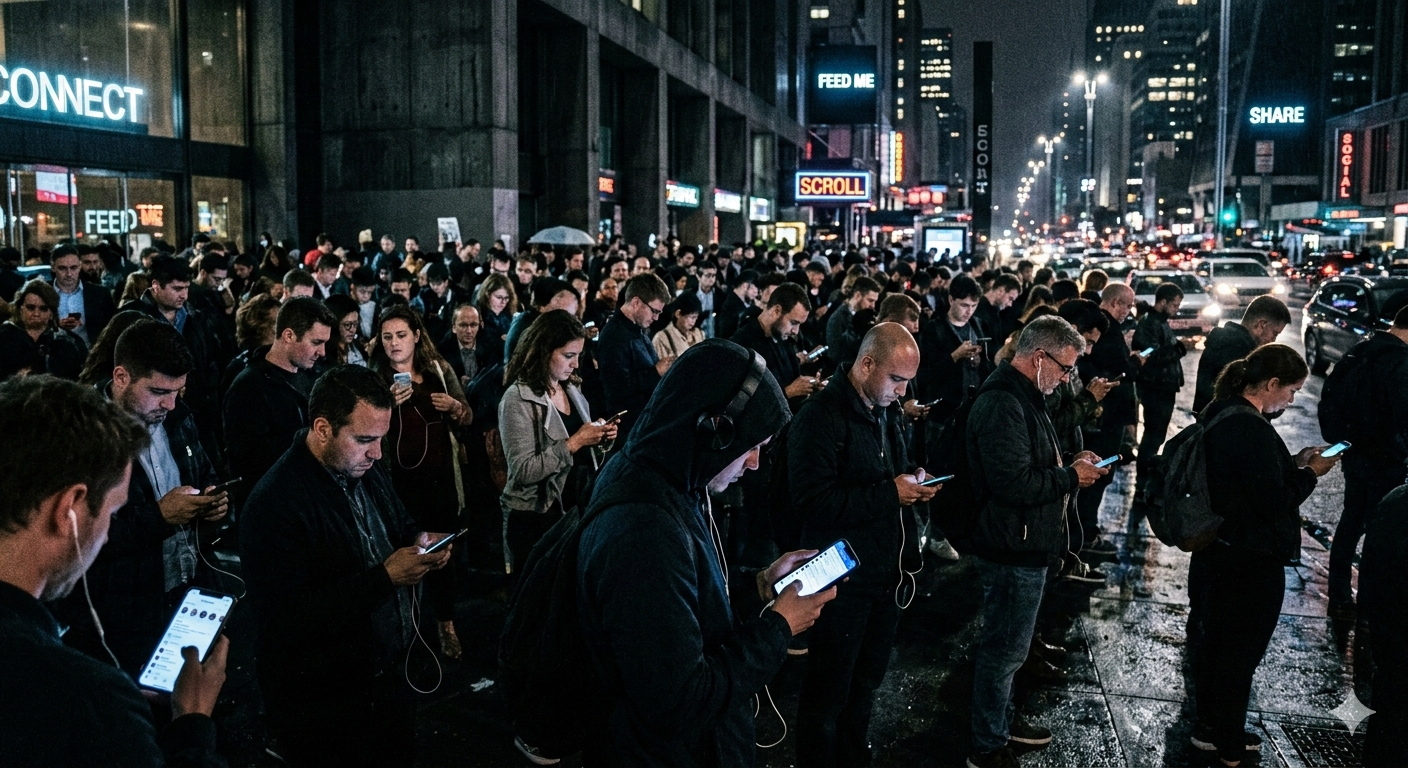
Social media has become one of the most influential forces in modern life because it no longer sits at the edge of daily experience. It moves into the ordinary flow of the day and stays there. People reach for it in the morning, return to it in moments of silence, use it while waiting, and often end the day with it still in front of them. For many, it has become one of the main places where life is interpreted, emotions are managed, and discomfort is avoided.
Anything this constant will shape a person. Social media is not a passing influence that touches life occasionally and then fades into the background. It presses on attention, emotion, desire, and thought with enough regularity that it begins to leave marks on the inner life. That is one of the reasons Christians cannot afford to think of it as a light or secondary matter. It has become one of the dominant environments in which many people now live, and because of that, it has become one of the clearest battlegrounds for the heart.
Social Media Is Not Neutral
It is common to hear social media described as neutral, with the assumption that the real issue is only how people choose to use it. There is some truth in that. Individuals are responsible for what they consume, what they promote, and what they allow to shape them. Even so, that explanation does not fully account for what these platforms actually do.
Social media does more than deliver content. We’ve transitioned out of the social aspect of social media, it now rests heavily on the attention economy, where it favors speed over patience, reaction over reflection, spectacle over depth, and emotional force over careful judgment. It teaches people to keep moving, keep consuming, and keep responding. In that sense, it is not simply handing people information. It is training the way they relate to information.
That matters spiritually because Christians are never called to think only about isolated choices. They are also called to think about formation. If something is steadily influencing what captures the mind, what stirs emotion, and what becomes difficult to turn away from, then it is doing more than entertaining. It is shaping the inner person.
Romans 12:2
“Do not be conformed to this world, but be transformed by the renewal of your mind…”
That warning does not apply only to moments of open rebellion. Conformity can happen through repetition, through familiar patterns, and through environments that slowly tutor the mind into the pace and priorities of the world.
The War for Attention
Attention is not a minor part of spiritual life. What regularly holds a person’s attention will often help direct the life of the soul. The things we return to, dwell on, react to, and absorb do not remain external to us for long.
That is part of what makes social media spiritually serious. It is built to compete for attention, and attention is closely tied to devotion. Once a person’s attention is consistently captured, it becomes easier to shape what they love, what they fear, and what they assume to be important. The structure of social media is designed around continued engagement, which means the struggle is not merely over how much time is spent there, but over what kind of inward life is being cultivated in the process.
A fragmented mind becomes easier to pull away from prayer, meditation, careful thought, and presence. When a person grows used to constant stimulation, silence begins to feel difficult, and stillness can even start to feel unfamiliar. Over time, the ability to remain attentive before God is weakened, not because God has become less worthy of attention, but because the heart has been trained to expect interruption.
Ephesians 5:15–16
“Look carefully then how you walk, not as unwise but as wise, making the best use of the time…”
That wisdom applies not only to how a person schedules the day, but also to what is allowed to govern the mind while the day unfolds.
Distraction as a Way of Life
For many people, social media has become less a tool of communication and more a reflex of escape. It is often the first response to boredom, awkwardness, loneliness, stress, or inward discomfort. Instead of sitting in silence, people reach for distraction, mortified at the proposition of remaining with their thoughts, they move quickly toward noise. Instead of bringing unease before God, they turn toward something easier, nothingness…reels, puppies, fitness influencers.
That habit has consequences. It teaches people to live in a state of low-grade interruption, where the inner life is rarely examined for long and ordinary moments are constantly broken apart by the urge for stimulation. A person can gradually lose the ability to remain still, not because stillness has lost its value, but because the soul has grown dependent on movement and input.
This is one of the quieter ways social media affects people. The issue is not always dramatic or immediately visible. Sometimes the deeper problem is simply that a person no longer knows how to be alone, how to think without outside noise, or how to sit before anything, let alone God, without reaching for something else.
Psalm 46:10
“Be still, and know that I am God.”
That command meets modern life with unusual force. Stillness now has to be fought for in an environment that makes distraction easy and constant.
Lust, Objectification, and Instant Access
Social media also demands seriousness because of how easily it places temptation in front of the eyes. Sexualized images, suggestive content, and carefully crafted visual appeal can appear with very little effort and often without deliberate pursuit. What once may have required a conscious search can now arrive in the middle of ordinary scrolling.
That ease of access changes people, and it encourages the eyes to wander as it trains the mind to consume other human beings visually. Over time, people can begin to look at others in ways detached from dignity, restraint, and holiness. The casual nature of the medium makes this danger easier to excuse, but the fact that temptation appears casually does not make it spiritually light.
Psalm 101:3
“I will not set before my eyes anything that is worthless.”
That is a demanding standard, and it is meant to be. A Christian is not called to receive everything a screen offers with passive resignation. The eyes, the imagination, and the heart all require guarding.
Social media can also distort how people understand themselves and one another. Bodies become instruments of attention while beauty becomes currency, and sexuality becomes performance. The result is not only personal temptation, but a deeper deformation of how human beings are seen. People made in the image of God are reduced to surfaces, and the heart becomes less capable of loving with clarity and honor.
Anxiety, Coveting, and the Comparison Trap
One of the most familiar dangers of social media is the way it intensifies comparison. People are continually presented with curated images of beauty, success, relationships, homes, families, travel, achievement, and public affirmation. Because most of what is posted has been selected and refined, viewers are often comparing their ordinary lives to someone else’s carefully edited presentation.
That environment easily stirs envy and discouragement. A person can begin to feel behind, lesser, unattractive, unseen, or dissatisfied without fully realizing why. Even brief exposure can leave the soul more restless than it was before. What makes this especially deceptive is that the cycle often continues even after it has already proved empty.
1 John 2:16
“For all that is in the world—the desires of the flesh and the desires of the eyes and pride of life—is not from the Father but is from the world.”
Digital life gives those desires plenty to feed on. Not every image is sinful, and not every post is corrosive, but the environment itself often works against contentment, humility, and peace.
False Teachers, False Narratives, and Weak Discernment
Social media has also become one of the fastest ways to spread falsehood. Error travels quickly, and it often travels attractively. A false teacher no longer needs a pulpit or a building to gain influence. A camera, a platform, and a compelling presence can be enough to reach enormous numbers of people. In that setting, tone, confidence, and visual appeal often carry more weight than truth.
That is dangerous for the church because many people now receive steady spiritual influence from clips, personalities, and fragments rather than from Scripture read carefully, truth taught in context, and life lived within a faithful local church. They are often drawn in by what feels powerful, immediate, or emotionally satisfying, but they are not always asking whether what they are hearing is actually biblical.
2 Timothy 4:3–4
“For the time is coming when people will not endure sound teaching, but having itching ears they will accumulate for themselves teachers to suit their own passions, and will turn away from listening to the truth and wander off into myths.”
Scripture consistently warns that people are inclined to embrace teaching that aligns with their preferences rather than submitting themselves to what is true, and social media gives that tendency unusual speed and reach. A person can return to the same voices throughout the day and slowly be shaped by them without recognizing how much influence has been given.
Falsehood also appears through distorted stories, misleading clips, exaggerated claims, rumors, and content designed to provoke reaction before reflection. Many people respond quickly and move on without ever stopping to examine whether what they have seen is accurate. Over time, this weakens the ability to think carefully and judge rightly.
Christians are called to be patient with truth. They are meant to be steady, not easily carried along by what feels persuasive in the moment. When that steadiness is replaced by constant reaction, it becomes harder to remain grounded in what is actually true. The issue is not only what a person believes, but how they have learned to believe.
The Good That Can Still Be Done
For all its dangers, social media is not without any redeeming use, and truth can still be shared there. The Gospel can still reach people who would not otherwise hear it, and encouragement can travel quickly. Stories of mercy, acts of compassion, and reminders of grace can break through the noise and give God glory, even in the midst of an objectively morally bankrupt collection of platforms.
It would not be right to speak as though nothing good ever happens in these spaces. There are moments online that carry real care, clarity, and even wisdom.
Even so, the presence of good does not remove the need for discernment. A medium that can carry truth can also carry vanity, deception, lust, envy, and distortion at scale. The possibility of good does not make the environment harmless, and it means Christians must learn to move within it carefully, with an awareness of what it is doing to them over time.
How Christians Should Practice Digital Discernment
If social media is this influential, then believers need a more deliberate approach to how they use it. The question is not only how much time is spent there, but what kind of person is being formed through that time.
A Christian should consider what kind of material is shaping the mind and understand that not everything that holds attention is worth keeping. Some things leave the soul clearer and more grounded, while others leave it restless, distracted, or dull.
It’s also worth asking why the phone is being reached for so often when quiet moments seem to descend on our otherwise overstimulated minds and hearts. At times, it’s simple communication or harmless enjoyment. At other times, it becomes a way of avoiding silence, responsibility, or the condition of one’s own heart. When that happens, the issue has already moved beyond technology into something more personal.
Discernment also requires testing what is heard. A compelling voice is not the same as a trustworthy one. Emotional impact is not the same as truth. Christians are called to weigh what they receive, not simply absorb it.
Philippians 4:8
“Finally, brothers, whatever is true, whatever is honorable, whatever is just, whatever is pure, whatever is lovely, whatever is commendable, if there is any excellence, if there is anything worthy of praise, think about these things.”
This is a real standard for the life of the mind. Social media should not be treated as an exception to it.
Boundaries are also part of wisdom. For some, that may mean limiting time. For others, it may mean removing certain influences, stepping away from platforms, or creating space where the mind is not constantly interrupted. These choices are not about restriction for its own sake. They are about protecting the clarity and stability of the inner life.
There is also a difference between being informed and being formed well. A person can consume a great deal of information and still grow less patient, less peaceful, and less discerning. The goal is not simply to know more, but to become more faithful.
Why the Heart Must Be Guarded
At the center of all of this is the heart. Social media matters because the heart is being shaped through it. If the inner life is slowly bending toward distraction, envy, fear, lust, vanity, or deception, then the issue is not merely digital. It is deeply spiritual.
Scripture speaks with seriousness about guarding the heart because what enters repeatedly does not remain without effect. What a person lingers over, returns to, or quietly accepts will begin to leave marks.
Proverbs 4:23
“Keep your heart with all vigilance, for from it flow the springs of life.”
That command carries weight in an age where attention is constantly being directed and desire is constantly being stirred. Guarding the heart is not excessive caution. It is a necessary part of walking faithfully.
A Battle That Must Be Fought Honestly
This subject feels large because it is large. Social media is not a small influence in modern life. It shapes how people think, what they value, how they compare, and where they turn when they do not want to face what is happening within them.
Christians cannot afford to treat it casually. This does not mean every platform must be abandoned, and it does not deny that good can be done there. It does mean the environment should be seen clearly. It is a place where distraction is constant, temptation is close, and truth can easily be mixed with error.
The deeper issue is not only what a person does online. It is what kind of person they are becoming through it.
Faithfulness in this age requires more than adjusting habits. It requires a renewed mind, a guarded heart, and a willingness to live with greater clarity before God.