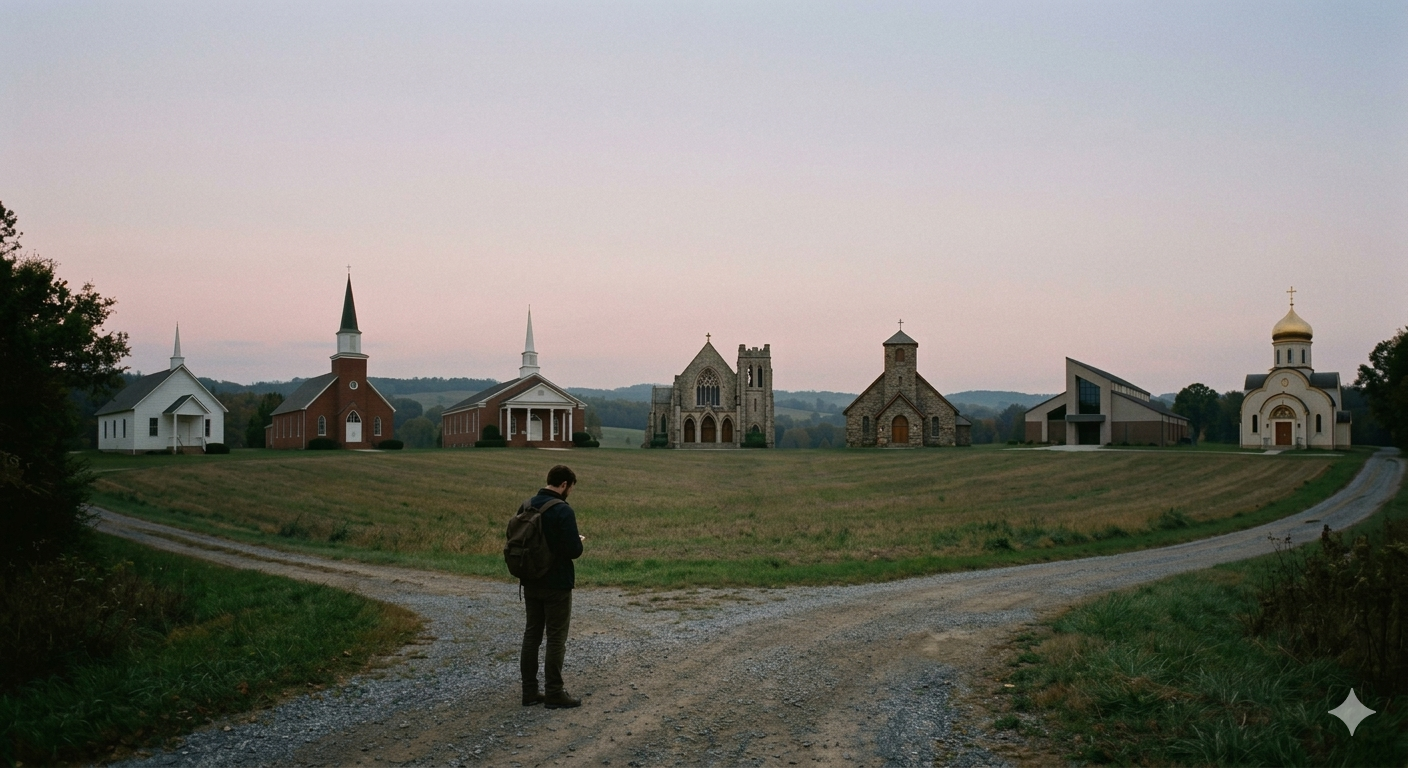






Living in a Fallen World Does Not Mean Every Place Is the Same
“Sin is everywhere.” That part is true. We live in a fallen world, and there is no corner of life untouched by human brokenness. You can find greed in business, vanity in fashion, dishonesty in advertising, selfishness in families, and corruption in institutions that look respectable on the surface.
But it still does not follow that every place shaped by sin should be treated the same way.
Living faithfully in a broken world is not the same as choosing to spend your leisure time in an environment designed to stir the flesh. Buying groceries, working a job, traveling through public spaces, or taking care of ordinary responsibilities belongs to the normal structure of life in a fallen society. Deliberately entering a setting built around drunkenness, sensuality, vanity, and lowered restraint is something else.
A store may be owned by people who do not honor God. A company may have unethical practices. A restaurant may be staffed by unbelievers. None of that is ideal, but those places are still tied to the ordinary functions of life. Nightclubs are different because they are not built around necessity. Their draw is the atmosphere itself. People go for the mood, the energy, and everything that comes with it.
So the issue is not whether sin exists everywhere. The issue is whether believers should willingly place themselves in environments that openly celebrate what God calls them to flee.
The Question Is Bigger Than “Am I Personally Sinning?”
This is where many Christians set the standard too low. They ask whether they personally are doing anything wrong. They say they are not getting drunk, not hooking up, and not crossing any clear line they have drawn for themselves. From there, they conclude that nothing about the setting itself should trouble them.
But the Christian life is not meant to be measured by technical innocence alone.
A wiser set of questions presses deeper. Does this honor God? Is this helping me walk in holiness, or is it quietly weakening my judgment? Does this place me in a setting that nourishes faithfulness, or one that makes provision for the flesh?
A great many bad decisions begin with the wrong moral framework. Instead of asking what is holy, people ask what is merely allowed. Instead of asking what builds godliness, they ask what they can justify.
1 Corinthians 10:23
“All things are lawful, but not all things are helpful. All things are lawful, but not all things build up.”
That verse matters here because it reminds believers that bare permission is not the highest standard. The deeper question is whether something is helpful, whether it builds up, and whether it fits a life that is trying to walk faithfully before God.
What Kind of Atmosphere Is a Nightclub Designed to Create?
A nightclub is more than a room with music in it. It is an environment intentionally shaped to encourage sensuality, excess, impulse, intoxication, visual stimulation, and lowered inhibition.
None of that is accidental. The music, the darkness, the drinking culture, the energy, the body language, the sexual tension, and the vanity all belong to the design of the place. That is what the environment is meant to heighten.
For that reason, the discussion cannot be reduced to whether a particular Christian in the room is doing the worst thing there. The place itself is ordered around things that do not honor God. It is built to stir desires believers are called to govern, not feed.
Romans 13:13–14
“Let us walk properly as in the daytime, not in orgies and drunkenness, not in sexual immorality and sensuality, not in quarreling and jealousy. But put on the Lord Jesus Christ, and make no provision for the flesh, to gratify its desires.”
That passage leaves little room for pretending these environments are spiritually insignificant. A nightclub is not merely a place where temptation might happen. In many cases, it has been shaped to welcome it.
Christians Are Not Called to Flirt with the Flesh
One of the deeper problems in this conversation is that many believers have become comfortable trying to stand as close to temptation as possible while still insisting they have done nothing wrong.
The Christian life is not about getting as near to darkness as possible while maintaining a defense. It is about learning to walk in the light. It is about loving what is holy and growing in a real hatred of what pulls the heart toward compromise. When someone keeps asking whether it is acceptable to remain in environments built around sensuality and excess without technically sinning, a more revealing question starts to emerge: what is drawing the heart there at all?
That question matters because attraction to certain atmospheres can expose something deeper. A believer may not fall into the most visible sins in the room, but still be drawn to the energy, the suggestiveness, the vanity, the flirtation, and the emotional charge. That should not be brushed aside.
Galatians 5:16
“But I say, walk by the Spirit, and you will not gratify the desires of the flesh.”
Walking by the Spirit does not mean testing how much fleshly atmosphere you can tolerate while staying technically clean. It means learning to live honestly before God about what weakens holiness and what strengthens it.
“Jesus Sat with Sinners” Is Not the Same as Casual Participation
One of the more common defenses in conversations like this is the claim that Jesus sat with sinners. The argument often sounds spiritual on the surface. People say they can be in a bar, a nightclub, or some other morally compromised setting because Jesus was around tax collectors and sinners, and they can minister to the lost there too.
There is a truth buried in that instinct. Christians are not called to avoid unbelievers. We are not meant to retreat from the world as though holiness requires distance from every lost person or every difficult setting. Faithful evangelism will sometimes place believers in uncomfortable places, among broken people, in the middle of real human disorder. That by itself is not compromise.
But that still does not settle the question.
Jesus did sit with sinners, but He did not join them in the spirit of their sin. He was not present because He was drawn to the atmosphere or the fleshly appeal of those settings. He was there with purpose, holiness, and authority. He called people to repentance rather than blending into appetite-driven spaces and then framing His presence as ministry.
That distinction matters. A Christian entering a difficult place with deliberate evangelistic purpose, visible spiritual clarity, and a readiness to speak truth is not the same thing as a Christian going there for entertainment, for the atmosphere, or for the social thrill, and then claiming ministry only when challenged. One may be mission. The other is usually self-justification.
This is where a great deal of confusion enters. Many people appeal to evangelism when what they really want is permission. They use the language of reaching the lost to defend choices that are being shaped more by attraction than by obedience. That is not a small confusion, because once ministry language is used to protect fleshly desire, discernment becomes very difficult.
There is a real difference between intentional ministry and casual presence. Street ministries that enter nightlife areas to preach the Gospel, pray with people, help the vulnerable, or speak with those in distress are not the same as a Christian joining nightlife culture because they enjoy the environment and then retrofitting spiritual language onto it afterward.
Luke 5:31–32
“And Jesus answered them, ‘Those who are well have no need of a physician, but those who are sick. I have not come to call the righteous but sinners to repentance.’”
That passage makes Christ’s purpose unmistakable. He was not simply present with sinners. He was calling them somewhere. That should shape how believers think about their own presence as well. If the goal is truly ministry, it should be marked by clarity, purpose, and visible distinction.
Wisdom Avoids Places Built Around Temptation
Wisdom is not merely the ability to avoid the final step. Very often, wisdom means refusing the path that leads there.
That is part of why nightclubs are such a problem. They are not places where a person happens to encounter temptation by accident. Temptation is woven into the environment itself. The setting is built around elements that stir the flesh and make compromise more likely, not less.
Proverbs 4:14–15
“Do not enter the path of the wicked, and do not walk in the way of the evil. Avoid it; do not go on it; turn away from it and pass on.”
The principle is plain. Wisdom does not ask how close it can get to corruption without collapse. It turns away earlier than the flesh wants to.
Presence Communicates Something Too
Believers also forget that presence itself says something. Even if a person insists they are only there with friends, only there for a short time, or only there for the music, their presence still communicates a level of comfort with that environment.
That matters because Christians do not live only as private individuals. They live as people whose lives are meant to reflect Christ. Their choices say something to others, whether they intend them to or not. If a believer is comfortable being found in a place openly celebrating sensuality, vanity, intoxication, and fleshly indulgence, that can shape how others think about holiness, wisdom, and Christian witness.
This is not merely about appearances in a shallow sense. It is about what our choices affirm. Over time, repeated comfort in certain settings teaches both the heart and the watching world that those settings are spiritually normal. But not everything normal in culture should become normal for the Christian conscience.
1 Thessalonians 5:22
“Abstain from every form of evil.”
At the very least, that verse should create deep caution in believers about becoming comfortable in environments where evil is not merely present, but normalized and celebrated.
Why “All Places Have Sin” Is Not a Strong Enough Defense
The claim that all places have sin sounds stronger than it is. It appeals to something true, then uses that truth to flatten moral distinctions that still matter.
Yes, brokenness is everywhere. Every human space bears the marks of a fallen world. But environments do not all function the same way morally, and they do not all train the heart in the same direction.
That is why many believers instinctively feel a difference between going to buy clothes and going to a casino. The point is not that a casino is the only corrupt place in the world. The point is that it is structured to profit from addiction, desperation, false hope, and ruin. That differs from participating in the ordinary responsibilities of life. The same principle applies here.
A nightclub is not a problem simply because sinners are there. It is a problem because the environment itself is built to magnify and monetize desires that run against holiness.
If Christ Returned Right Now, Is This Where You Would Want to Be Found?
This is not meant as a dramatic line. It is a useful question because it cuts through excuse and reaches the level of spiritual seriousness.
If Christ returned right now, would this be a place where you would feel at peace being found? Would you be able to say with a clear conscience that this environment reflects the kind of life you are trying to live before Him? Would your presence there feel consistent with His holiness, or would the tension become obvious all at once?
That question matters because the Christian life is not compartmentalized. Christ does not merely claim Sunday morning. He claims the whole person. He is Lord over what we do for fun, where we spend our leisure, and what kind of spaces we become comfortable inhabiting.
Ephesians 5:8
“for at one time you were darkness, but now you are light in the Lord. Walk as children of light.”
That is the call. Not merely to avoid the final visible act of sin, but to walk as children of light.
Holiness Requires More Than Technical Innocence
At the end of the day, the issue is not whether a Christian can stand in a nightclub for an hour without personally committing the most visible sins in the room. The issue is whether believers should want to place themselves in environments that do not honor God and are built around things that oppose His will.
A Christian should want more than technical innocence. Holiness, wisdom, and a clean conscience are not excessive standards for the believer. They belong to ordinary faithfulness. The aim should not be a life that constantly presses against the edges of compromise while searching for a defense.
That does not mean believers must become isolated from the world. Christ did not call His people into fearful retreat. But He also did not call them to make peace with spaces that celebrate what He calls darkness.
Nightclubs are not just another ordinary setting in a fallen world. They are chosen environments of entertainment built around sensuality, intoxication, vanity, and fleshly excess. For that reason, I do not believe they are places Christians should be comfortable spending their time.
The better question is not, “Can I be there without doing something obviously wrong?” It is, “Why would I want to be there at all if I belong to Christ?”