




Why This Question Keeps Returning
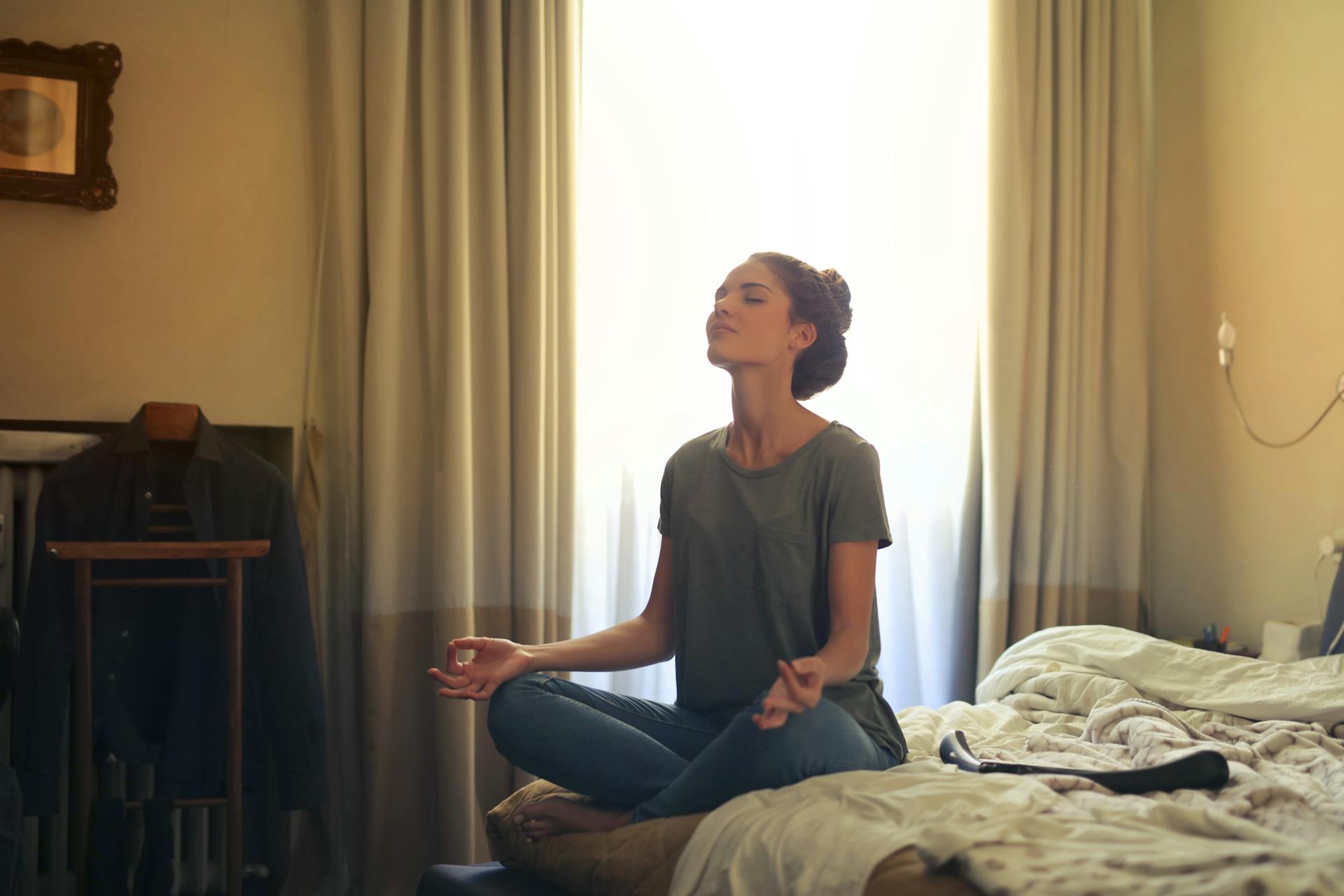
A lot of Christians ask this question because yoga does not seem overtly religious to them. It usually feels more like physical care than spiritual practice. For many people, the word brings to mind a class at the gym, a mobility video online, or a way to deal with stiffness after long workdays. That is part of what makes the question difficult. Most believers who ask it are not looking for a new spiritual path. They are trying to care for their bodies and are unsure whether there is anything spiritually serious beneath the surface.
That uncertainty deserves a thoughtful answer. It is not wise to mock the concern, but it is also not wise to dismiss it. Christians should be careful any time a practice with religious roots is repackaged as a neutral wellness activity. Modern culture often removes the language of worship while keeping forms, assumptions, and habits that did not arise from a Christian view of the world. The fact that a practice now feels ordinary does not settle whether it is fitting for a believer.
1 Thessalonians 5:21–22
“but test everything; hold fast what is good. Abstain from every form of evil.”
The question, then, is not whether Christians may stretch, breathe deeply, or pursue physical health. Of course they may. The question is whether yoga can truly be separated from its religious framework in a way that makes participation wise and clean before the Lord.
The Roots of Yoga Are Not Incidental
Part of the confusion comes from the way yoga is discussed in the West. It is often presented as if it were basically a neutral exercise method that later gathered spiritual language around it. Historically, that is not really what yoga is. Yoga developed within religious and philosophical systems that are not grounded in Christ. Even when a modern class is stripped of incense, chanting, or explicit references to Hindu spirituality, the practice did not begin as a simple program for flexibility.
That point does not answer every question by itself, but it does matter. Christians are not helped by pretending origins are irrelevant. Sometimes a cultural product really has been emptied of its former meaning. At other times, the surface has changed more than the substance. Wisdom requires more than noticing that a practice now appears harmless. It asks what the thing is, what it was made to express, and whether the believer is treating too lightly what should be examined more carefully.
Colossians 2:8
“See to it that no one takes you captive by philosophy and empty deceit, according to human tradition, according to the elemental spirits of the world, and not according to Christ.”
The point is not to create panic around everything unfamiliar. It is to remember that Christians are not free to define spiritual neutrality for themselves whenever culture makes something attractive enough.
Why Good Intentions Do Not Settle the Question
This is often where the conversation turns. Someone says, “I’m not doing the spiritual part. I’m only there for the stretching.” That statement should not be dismissed too quickly. Intention matters. There is a real difference between consciously participating in another form of worship and showing up to relieve back pain. God sees the heart, and Scripture does not encourage believers to make reckless accusations about motives.
Still, intention is not the whole issue. A sincere motive does not automatically make every practice wise. Christians are called not only to avoid open rebellion, but to grow in discernment. It is possible to approach something innocently and still fail to think carefully about what is being practiced, what is being normalized, and what kind of spiritual atmosphere is being treated as acceptable.
Scripture often warns God’s people against borrowing from surrounding forms of worship, not because every act of contact is identical, but because the heart is easily dulled by familiarity. Once something looks ordinary, it becomes easier to stop asking whether it belongs in the life of a believer at all.
Deuteronomy 12:30–31
“take care that you be not ensnared to follow them, after they have been destroyed before you, and that you do not inquire about their gods, saying, ‘How did these nations serve their gods?—that I also may do the same.’ You shall not worship the Lord your God in that way…”
That passage is not about yoga in particular, and it should not be used carelessly. But the principle does matter. God’s people are not meant to casually adopt practices shaped by other spiritual systems and then assume that a clean motive removes every concern.
The Body Is Part of Christian Worship
Another reason this question matters is because Scripture does not treat the body as spiritually irrelevant. Christianity does not teach that the soul is the only thing that matters while the body is just a shell to manage until heaven. What believers do bodily is part of discipleship. The body is not outside the reach of worship, obedience, or holiness.
1 Corinthians 6:19–20
“You are not your own, for you were bought with a price. So glorify God in your body.”
Romans 12:1
“present your bodies as a living sacrifice, holy and acceptable to God, which is your spiritual worship.”
That does not mean every physical posture carries automatic religious significance. It does mean Christians should not assume bodily participation is morally empty by default. Even when an activity feels merely physical, the question of worship and wisdom may still be present. We do not honor God only with ideas. We honor Him with our whole lives, including the habits we form and the practices we welcome into ordinary life.
Stretching Is Not the Same Thing as Yoga
This distinction needs to be made clearly, because some Christians become fearful in ways Scripture does not require. There is nothing unfaithful about stretching, mobility work, physical therapy, controlled breathing for bodily regulation, or exercise meant to improve strength and flexibility. The issue is not movement itself. The issue is the framework in which that movement is practiced and understood.
A believer doing stretches at home is not automatically participating in yoga in any meaningful religious sense. Someone following rehabilitation exercises after an injury is not secretly engaging in false worship because a posture resembles something used elsewhere. The Christian conscience does not need to become superstitious about ordinary bodily care.
At the same time, once a practice is intentionally presented as yoga, the questions become harder to avoid. If the benefits being sought are physical, and those benefits can be gained through stretching, therapy, Pilates, mobility training, or other exercise, then a Christian should at least ask why it feels necessary to hold onto the practice most closely associated with another spiritual tradition. That question does not solve every case, but it is a wise one.
1 Corinthians 10:31
“So, whether you eat or drink, or whatever you do, do all to the glory of God.”
That verse pushes beyond the question of bare permission. It asks whether something can actually be done unto the Lord with honesty, clarity, and an undivided conscience.
A Matter of Wisdom, Conscience, and Clarity
This is where the discussion needs to stay careful. Not every Christian will frame the concern with the same level of precision, and not every situation is identical. A person may have gone to yoga classes for years without ever thinking about the religious roots. Another may begin to feel uneasy the moment they learn more. Another may conclude that the association is too strong to ignore and choose to walk away entirely. In all of this, Christians should resist both careless liberty and dramatic exaggeration.
Romans 14:23
“For whatever does not proceed from faith is sin.”
That verse does not mean every private hesitation becomes a universal law for the whole church. It does mean a believer should not force peace where peace does not exist. If you have to keep explaining away your discomfort, if the spiritual associations continue to trouble you, or if the whole thing feels difficult to offer to God with a clean heart, that should not be ignored.
Discernment often begins with plain honesty. A believer may need to admit that the attraction is not only physical relief, but also the atmosphere and language surrounding the practice. It is also worth asking whether the habit is being defended because it has truly been examined, or simply because it feels good and has become familiar. In many cases, the physical benefits could be found elsewhere without the same ambiguity. Those questions are more useful than trying to discover the narrowest line a Christian can stand on without technically crossing it.
And where wisdom is lacking, Scripture gives a better answer than online debates do.
James 1:5
“If any of you lacks wisdom, let him ask God, who gives generously to all without reproach, and it will be given him.”
The Real Concern Beneath the Question
The deeper issue is larger than yoga itself. Christians live in a culture that regularly repackages spiritual ideas as therapeutic tools. Language about balance, mindfulness, energy, awakening, and inner peace often sounds harmless because it arrives in a soothing tone and is marketed as self-care. But not everything that settles the body is helping the soul.
That does not mean believers need to become suspicious of every unfamiliar practice. It does mean they should stop assuming that cultural acceptance proves spiritual innocence. Cultural popularity does not settle the spiritual question. A practice may be widely accepted and heavily commercialized while still carrying assumptions that do not fit a Christian understanding of worship, truth, and the human person.
James 1:27
“Religion that is pure and undefiled before God, the Father, is this… to keep oneself unstained from the world.”
For that reason, I do not think Christians should be casual about yoga. I would not tell believers to panic over every stretch or every posture that resembles something found in a yoga class. But I do think wisdom should make us slow to embrace a practice so closely tied to another spiritual tradition, especially when the physical benefits can be found elsewhere without the same confusion.
The question is not whether a person can make the practice seem harmless enough to keep. The better question is whether it can be received and done with a clear conscience before God, in a way that is genuinely fitting for someone who belongs to Christ. In many cases, the wiser path may be to leave it alone.